
Introduction
Getting locked in a bathroom is one of those situations nobody plans for but almost everyone faces at some point. Whether the lock jams, the knob breaks, or a child accidentally turns the privacy latch and cannot figure out how to turn it back, the result is the same: panic sets in fast. The good news is that most bathroom lock-in situations are solvable within minutes, without damaging your door or calling an emergency locksmith. This guide walks you through every angle of the problem, from getting yourself out to making sure it never happens again.
Why Bathroom Locks Fail?
Bathroom locks are not built to the same standard as front door locks. They are designed for privacy, not security, which means the mechanisms are simpler and more prone to failure over time.
The most common reasons a lock in a bathroom stops working include worn-out internal components, a misaligned door frame, humidity and moisture causing metal parts to corrode, or a latch that has become stiff from years of use. In older homes, the lock hardware may have degraded to the point where the thumb-turn or button simply stops engaging the latch properly.
Children are another frequent cause. A small child who locks the bathroom door from the inside and then cannot figure out how to unlock it is an extremely common household emergency. In those cases, speed and calm matter more than tools.
What to Do If You’re Locked In a Bathroom?
If you find yourself locked inside a bathroom, the first thing to do is stay calm. Panicking makes the situation worse and clouds your thinking.
Step 1: Try the obvious first. Push or pull the door while simultaneously turning or sliding the lock. Sometimes the latch is simply stuck due to pressure on the door frame, and a firm push while turning the lock is enough to release it.
Step 2: Look for a manual release. Most privacy locks have a small slot or hole on the inside of the knob or lever. Insert a coin, a flat-head screwdriver, or even a sturdy fingernail to turn that slot. This is a built-in emergency release on most interior bathroom locks.
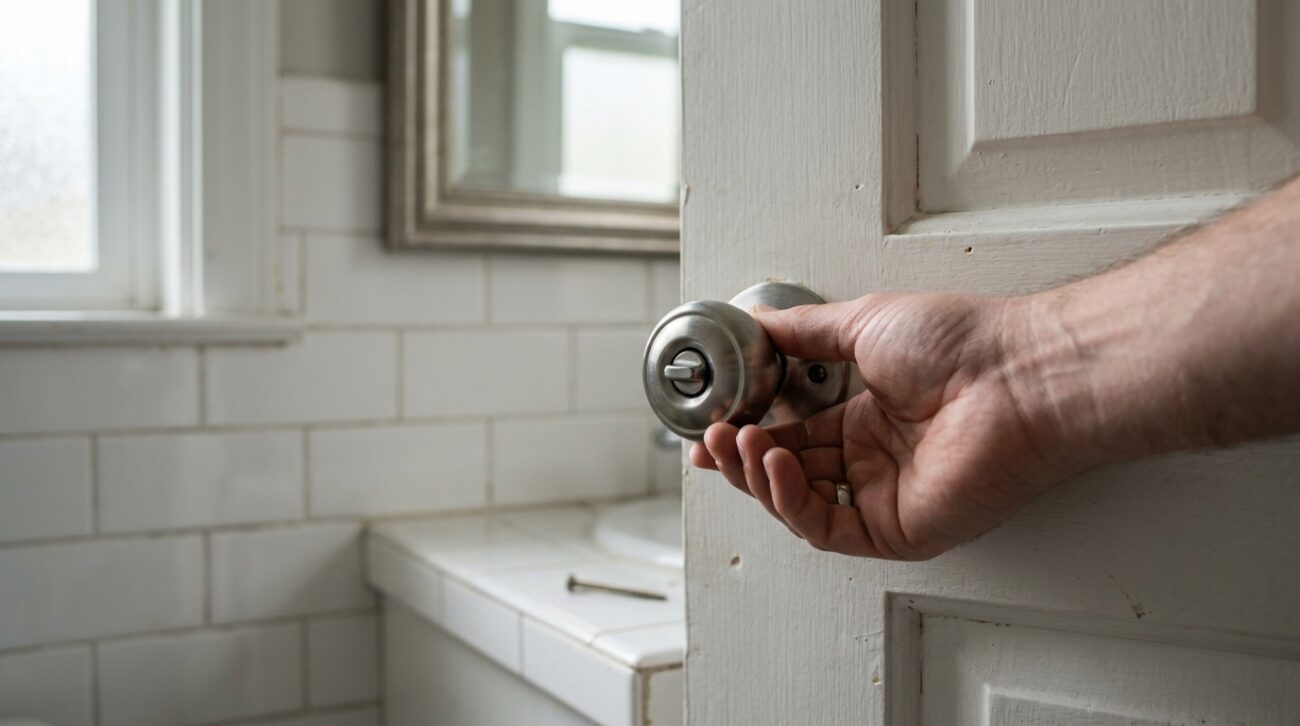
Step 3: Remove the door handle. If the lock mechanism is completely seized, look for a screw on the interior handle plate. A simple Phillips-head screwdriver, which many people keep in a bathroom drawer, can remove the handle and expose the locking mechanism directly.
Step 4: Communicate. If someone is on the other side, guide them using the tips in the next section.
Step 5: As a last resort, a bathroom door is typically hollow-core and lightweight. If there is a genuine emergency (medical issue, fire), a firm shoulder against the door near the latch can break it open. This should only be done when there is no other option.
How to Unlock a Bathroom Door from the Outside?
If someone is locked in a bathroom and you need to get them out from the other side, here is what you can do without professional tools.
Most bathroom doors use a privacy lock, which has a small pinhole on the outside of the knob or handle. This is deliberately placed there for exactly this situation. Take a thin, rigid object, such as a bobby pin, a small flathead screwdriver, a straightened paperclip, or even the emergency tool that often ships with the lock hardware, and insert it straight into that pinhole. Push inward with light pressure and turn. The door will open.
If there is no pinhole, the lock type may be a lever-style privacy lock with a slot instead. Use a coin or flat screwdriver to turn the slot 90 degrees.
For older doorknobs without either feature, you may need to use a credit card or thin flexible plastic to slip between the door and the frame, pushing the angled latch back while turning the handle. This works better on doors that open toward you and where the latch is not a deadbolt-style mechanism.
Tools You Can Use to Open a Stuck Bathroom Lock
You do not need a locksmith’s toolkit to handle most bathroom lock problems. The following items are usually enough:
- Bobby pin or paperclip: Straighten it out and use it to engage the emergency pinhole release.
- Thin flathead screwdriver: Works for slot-style releases and for removing handle screws.
- Credit card or plastic loyalty card: Useful for shimming back a spring latch on older doors.
- Butter knife: Can substitute for a flathead screwdriver in a pinch.
- Coin: Works on thumb-turn slots found on the outside of many privacy knobs.
The key point is that bathroom locks are intentionally easy to defeat from the outside because they are privacy locks, not security locks. In most cases, the right tool is something you already have nearby.
When to Call a Locksmith vs. DIY?
Most bathroom lock situations do not require a locksmith. If the lock has simply jammed or a child has accidentally engaged the latch, the pinhole method or handle removal will solve the problem in under five minutes.
You should call a locksmith when the lock mechanism has completely broken internally and no DIY method works, when the door frame has warped so badly that the door will not open even after the lock is disengaged, or when the situation involves a vulnerable person (elderly, young child, someone with a medical condition) and time is critical.
A locksmith visit for an interior bathroom lock typically costs less than a standard service call for exterior locks, since the work involved is minimal. However, for most households, keeping a universal privacy lock release tool or a thin screwdriver in a nearby drawer eliminates the need for professional help entirely.
How to Prevent Getting Locked In a Bathroom?
Prevention is straightforward once you understand why locks fail.
Replace aging hardware. If your bathroom lock is more than 10 to 15 years old and feels stiff or inconsistent, replace it. New privacy lock sets cost very little and install in minutes.
Lubricate the lock mechanism annually. A small amount of graphite powder or a silicone-based lubricant applied to the latch and lock mechanism keeps parts moving freely and prevents corrosion in humid bathroom environments.
Keep an emergency tool accessible. Tape a bobby pin or a small flathead screwdriver to the outside of the bathroom door frame, or keep one in a nearby drawer. If a child locks themselves in, you will have what you need immediately.
Teach children how locks work. Show kids in your household how to unlock the bathroom door from the inside. A quick two-minute demonstration can prevent a genuine emergency.
Check door frame alignment. A door that does not hang straight puts pressure on the latch and makes it harder to disengage the lock. Adjusting the strike plate or hinge screws can fix this.
Bathroom Lock Types and Their Weaknesses
Understanding your specific lock type helps you respond faster when something goes wrong.
Push-button privacy locks are the most common. They lock with a button on the inside knob and unlock with a pinhole on the outside. They are easy to defeat and easy to accidentally engage.
Thumb-turn privacy locks use a small lever or turn-piece on the inside, with a slot release on the outside. These are slightly harder for young children to engage accidentally.
Sliding bolt locks (barrel bolts) are common in older bathrooms. These can jam if the barrel becomes corroded or if the door shifts. They have no external release and require removal of the bolt hardware from the inside if they seize.
Lever-handle privacy locks are common in modern construction. They function similarly to push-button types but are generally smoother to operate and less prone to accidental engagement.
Conclusion
A lock in bathroom situations is stressful in the moment but almost always fixable without professional help. The pinhole release method alone solves the vast majority of cases in under a minute. Beyond that, simple habits like lubricating locks annually, replacing old hardware, and keeping a basic tool within reach turn a recurring household frustration into a non-issue. If you take one thing from this guide, make it this: go right now and check whether you have something close to your bathroom door that could open it in an emergency. That thirty seconds of preparation is worth far more than any locksmith call.
FAQs
How do you unlock a bathroom door without a key?
Most bathroom doors use privacy locks, not keyed locks. Insert a thin object like a bobby pin or small screwdriver into the pinhole on the outside knob and push inward while turning. The door will unlock without any key required.
What do you do if a child locks themselves in the bathroom?
Stay calm and speak to the child reassuringly through the door. Use the pinhole release on the outside of the doorknob to unlock it from your side. If the child is in no danger, guide them to turn the lock themselves while you talk them through it step by step.
Can a bathroom door be unlocked with a credit card?
Yes, but only if the door has an older spring latch mechanism and opens toward you. Slide the card into the gap between the door and the frame, angled toward the latch, and push the latch back while turning the handle. This does not work on deadbolt-style latches or doors that open away from you.
Why do bathroom locks get stuck?
Bathroom locks get stuck due to moisture and humidity causing corrosion, worn-out internal components, a misaligned door frame putting pressure on the latch, or simple lack of lubrication over years of use.
How much does it cost to fix a bathroom lock?
A new bathroom privacy lock set costs between $15 and $60 depending on the quality and finish. Installation is a DIY job for most homeowners. If you call a locksmith to handle a stuck or broken bathroom lock, expect to pay a standard service call fee, typically between $50 and $150 depending on your location.
