
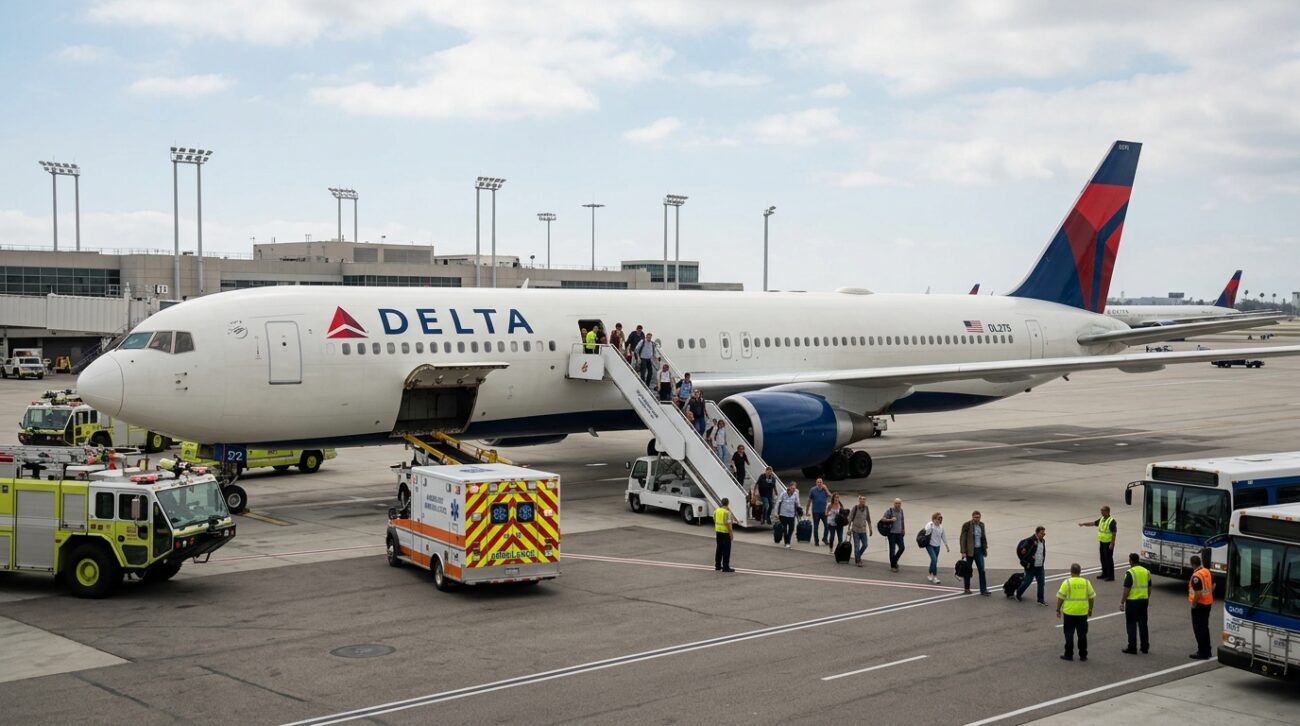
The phrase “delta flight dl275 diverted lax” quickly began trending online after reports surfaced that a Delta Airlines flight unexpectedly changed its route and landed at Los Angeles International Airport. Flight diversions often attract public attention because many travelers immediately wonder whether there was an emergency, a technical issue, or a passenger safety concern involved. In this case, the diversion of Delta flight DL275 created widespread discussion across aviation news websites, social media platforms, and live flight tracking services.
Whenever a commercial airline changes course during an international journey, passengers naturally become concerned. Travelers want to know if the aircraft experienced a mechanical problem, whether anyone onboard was in danger, and how the airline handled the situation. Reports connected to the Delta flight DL275 diverted LAX incident mentioned emergency landing procedures, airline safety responses, and updates regarding the flight’s status after arrival in Los Angeles.
Although flight diversions are not uncommon in the aviation industry, they are always treated seriously by airlines and airport authorities. Safety remains the highest priority during any in-flight incident, and airlines follow strict procedures to protect passengers and crew members. The incident involving Delta Airlines flight DL275 became an important example of how modern aviation systems respond quickly during unexpected situations.
Delta Flight DL275 Overview
Delta Airlines flight DL275 is an international commercial flight operated by Delta Air Lines. Like many long-haul flights, DL275 was scheduled to travel between major international destinations while carrying passengers across a lengthy route. Flights of this kind are carefully monitored throughout the journey because international operations involve multiple air traffic control systems, weather checks, fuel management procedures, and aircraft performance evaluations.
Before the diversion occurred, the flight reportedly followed its planned route without any major public concerns. Passengers onboard were expecting a standard international journey, and the aircraft was operating under normal commercial airline procedures. However, somewhere during the flight, conditions changed and the crew made the decision to divert the aircraft to Los Angeles International Airport, commonly known as LAX.
The diversion quickly drew attention because LAX is one of the busiest airports in the United States and often handles emergency landings for international flights. Aviation tracking websites began updating the flight’s route information, while online users searched for terms such as “dl275 flight status,” “delta flight emergency today,” and “why was delta flight dl275 diverted.”
As news spread online, many people closely followed the situation to learn whether the diversion was caused by a technical problem, a medical emergency, or another operational concern.
Why Delta Flight DL275 Was Diverted to LAX?
One of the biggest questions surrounding the Delta flight DL275 diverted LAX incident was the reason behind the sudden route change. In many aviation situations, diversions occur because pilots or airline operations teams identify conditions that may affect the safety or efficiency of the flight. These situations can include mechanical concerns, medical emergencies, severe weather, fuel-related issues, or operational restrictions at the destination airport.
Early reports connected to Delta flight DL275 suggested that the diversion may have been linked to an in-flight concern that required precautionary action. Airlines often choose to divert aircraft even when problems appear minor because aviation safety rules encourage immediate action whenever there is uncertainty regarding aircraft systems or passenger well-being.
Pilots are trained to make fast and careful decisions during emergencies. If there is any indication that continuing the original route may increase risk, the flight crew works closely with air traffic control and airline operations centers to identify the safest nearby airport. In this case, Los Angeles International Airport was selected because it offers extensive emergency support services, advanced maintenance facilities, and the ability to accommodate large international aircraft.
Commercial airlines follow strict emergency landing procedures that are designed to reduce risk and protect everyone onboard. These procedures include coordination with airport emergency teams, communication with cabin crews, and preparation for a safe landing. Although passengers may feel anxious during a diversion, airlines treat these decisions as precautionary safety measures rather than signs of immediate danger.
Emergency Landing at Los Angeles International Airport
After the decision was made to divert Delta flight DL275, the aircraft headed toward Los Angeles International Airport. Emergency landings at major airports involve careful coordination between pilots, air traffic controllers, airport emergency personnel, and airline operations staff. The goal is to ensure that the aircraft can land safely while emergency teams remain prepared for any possible issue.
At LAX, emergency response units reportedly prepared for the aircraft’s arrival as a precaution. This is standard procedure whenever an airline reports a possible in-flight issue. Fire crews, medical teams, and airport safety officers are often placed on standby until the aircraft lands successfully and the situation is fully evaluated.
Passengers onboard the flight likely received instructions from cabin crew members during the descent into Los Angeles. Flight attendants are specially trained to remain calm during emergency situations and help passengers follow safety procedures. Their role includes providing updates, preparing the cabin for landing, and ensuring that travelers understand any necessary precautions.
Fortunately, many flight diversions end safely without major injuries or serious incidents. In situations like the Delta flight DL275 diverted LAX event, the emergency response itself demonstrates how seriously airlines treat safety concerns. Even if the issue turns out to be minor, the aviation industry prefers to respond with maximum caution.
After landing, the aircraft would normally undergo inspection while passengers receive further information regarding delays, rebooking arrangements, or alternate travel plans.
Delta Airlines Response to the DL275 Incident
Following the diversion, Delta Air Lines reportedly focused on passenger safety and operational management. Airlines generally release statements confirming that crews followed established safety procedures and that the diversion was carried out as a precautionary measure.
Delta Airlines is known for maintaining detailed emergency response systems that allow the company to react quickly during unexpected situations. Once flight DL275 landed safely at LAX, airline teams likely worked with airport authorities to inspect the aircraft and determine the next steps for passengers and crew members.
Communication plays an important role during any airline emergency. Passengers expect updates regarding delays, safety concerns, and connecting flights. Airlines usually attempt to provide travelers with rebooking options, hotel accommodations if necessary, and customer support services after a major diversion.
Operational adjustments are also required after a diverted flight. Aircraft schedules, crew availability, and passenger itineraries may all need to be reorganized. Because international flights involve large numbers of travelers, even a single diversion can affect multiple connecting routes and airport operations.
The airline’s handling of the situation became part of the online discussion surrounding Delta flight DL275. Many travelers searched for live flight updates and official statements to better understand what had happened.
Passenger Experience and Onboard Situation
For passengers onboard Delta flight DL275, the diversion likely created a stressful and uncertain experience. Many travelers become anxious whenever an aircraft changes direction unexpectedly, especially during an international journey. Questions about safety, delays, and arrival times often arise immediately.
Cabin crews are trained to manage these situations professionally. Flight attendants typically provide calm instructions while keeping passengers informed as much as possible. Their primary responsibility is ensuring passenger safety and maintaining order throughout the diversion and landing process.
Reports connected to the incident suggested that passengers remained under standard safety procedures while the aircraft approached Los Angeles. During emergency landings, passengers are sometimes instructed to remain seated, review safety instructions, and prepare for possible emergency actions. Even when no immediate danger exists, airlines follow strict protocols to reduce risk.
After the flight landed at LAX, passengers may have faced delays related to inspections, immigration processing, baggage handling, or replacement flight arrangements. Some travelers likely shared their experiences online, contributing to the growing public interest surrounding the incident.
Despite the inconvenience, many passengers understand that diversions are made with safety as the highest priority. In the aviation industry, precautionary decisions are viewed as responsible actions rather than overreactions.
DL275 Flight Status and Latest Updates
As news about the Delta flight DL275 diverted LAX situation spread online, many people searched for real-time flight status information. Flight tracking websites and aviation news services began monitoring updates connected to the aircraft, including arrival details, delay reports, and possible rescheduling information.
Travelers commonly use flight tracker platforms to check whether diverted flights continue toward their original destinations or remain grounded for inspection. In some cases, airlines replace the aircraft entirely if maintenance teams identify technical concerns requiring further repairs.
The latest updates regarding DL275 mainly focused on passenger safety, aircraft inspections, and Delta Airlines operational responses. Because aviation incidents attract rapid public attention, live updates often become widely shared across social media and news platforms.
Online interest in the incident also highlighted how quickly aviation-related news spreads in the digital age. Terms such as “delta airlines breaking news,” “flight diversion news today,” and “delta flight live status” became popular searches as people looked for accurate information about the event.
Common Causes of Flight Diversions and Emergency Landings
Flight diversions occur for many different reasons, and not all diversions involve dangerous emergencies. Airlines may change routes whenever conditions affect the safe continuation of a flight.
Mechanical concerns are one of the most common reasons for emergency landings. Even minor technical warnings can lead pilots to divert because airlines prefer immediate inspections over unnecessary risk. Aircraft systems are highly advanced, but strict safety standards require careful monitoring throughout every flight.
Medical emergencies are another major reason for diversions. If a passenger or crew member experiences a serious health issue, pilots may choose to land at the nearest suitable airport to allow medical teams to respond quickly.
Weather conditions also play a major role in flight diversions. Severe storms, heavy winds, low visibility, or airport operational issues can force airlines to reroute flights unexpectedly.
In the United States, the Federal Aviation Administration oversees many safety regulations related to emergency procedures and commercial airline operations. Airlines follow these rules carefully to ensure passenger protection during unexpected situations.
Delta Airlines Safety Procedures During In-Flight Emergencies
Like other major international airlines, Delta Air Lines follows detailed emergency response procedures designed to protect passengers during in-flight incidents. Pilots receive extensive training for handling mechanical concerns, emergency landings, and operational disruptions.
When a possible issue is identified, flight crews communicate with airline operations centers and air traffic control teams to determine the safest course of action. The aircraft may then be diverted to an airport capable of providing emergency support and maintenance services.
After landing, maintenance teams inspect the aircraft carefully before it can return to service. These inspections are important because they help airlines identify the exact cause of the issue and prevent future problems.
Passenger safety remains the top priority throughout the process. Aviation safety standards require airlines to act quickly whenever uncertainty exists, even if the problem later proves to be minor. This safety-first approach explains why diversions like the Delta flight DL275 diverted LAX incident are handled with significant caution.
Passenger Rights After a Diverted Flight
Passengers affected by diverted flights often want to know whether they qualify for compensation, refunds, or travel assistance. Airline policies vary depending on the reason for the diversion and the length of the delay.
In many cases, airlines provide rebooking assistance, meal vouchers, hotel accommodations, or alternate travel arrangements for affected passengers. If the diversion results from operational issues within the airline’s control, travelers may receive additional support.
However, compensation policies can differ for weather-related disruptions or emergency safety situations. Airlines usually prioritize safety decisions above schedule concerns, meaning some delays may not qualify for standard compensation programs.
Passengers involved in diverted flights are generally encouraged to keep travel documents, monitor official airline updates, and speak with customer service representatives regarding available options.
Media Coverage and Public Reaction
The Delta flight DL275 diverted LAX incident became widely discussed online because aviation emergencies naturally attract public attention. Social media users, travel bloggers, and aviation news websites quickly began sharing updates regarding the flight’s status and diversion details.
Many online discussions focused on airline safety procedures and passenger experiences. Some users praised the quick response by pilots and emergency crews, while others expressed concern about technical issues connected to modern air travel.
Live flight tracking platforms also played a major role in spreading information. People were able to follow the aircraft’s route in real time, increasing public awareness of the situation before official updates were fully released.
The event demonstrated how modern aviation incidents can become global news stories within minutes, especially when international flights and emergency landings are involved.
Conclusion
The Delta flight DL275 diverted LAX incident gained attention because it involved an unexpected change in route and reports of an emergency landing at one of the busiest airports in the United States. While the exact details surrounding the diversion may continue to develop, the situation highlighted the importance of airline safety procedures and rapid emergency response systems.
Flight diversions can feel stressful for passengers, but they are usually precautionary decisions made to protect everyone onboard. Airlines like Delta Air Lines follow strict aviation safety standards whenever technical concerns, operational issues, or passenger emergencies arise during a flight.
The incident also showed how quickly aviation news spreads through live tracking systems, online discussions, and media coverage. As travelers continue following updates about Delta flight DL275, the event serves as another reminder that safety remains the highest priority in commercial aviation.
