
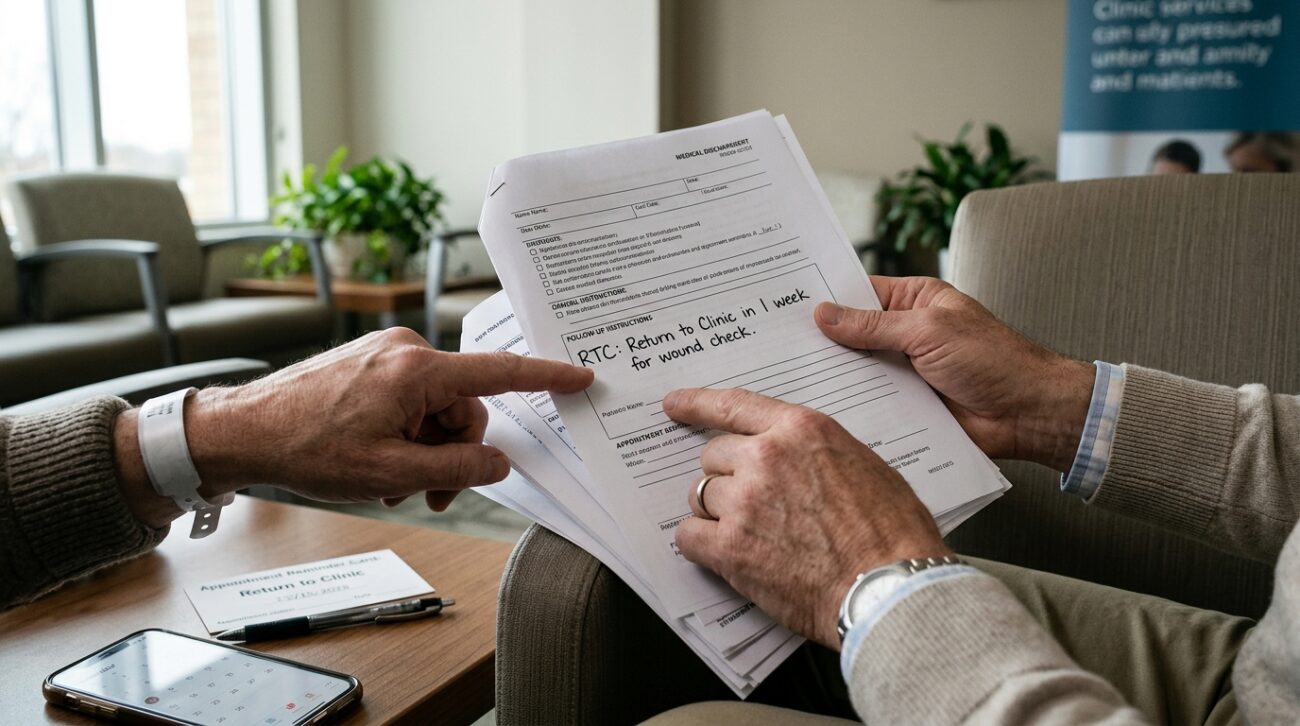
Introduction
If you’ve ever looked at your discharge papers or a clinical visit summary and spotted the letters “RTC,” you probably paused and wondered what it meant. Medical abbreviations are everywhere in healthcare documentation, and while they save time for providers, they can leave patients and even newer healthcare workers scratching their heads.
The RTC medical abbreviation is one of the most commonly used terms in clinical settings — and understanding it can directly affect your health outcomes. This guide breaks down exactly what RTC means, where it’s used, and why following an RTC instruction is more important than most patients realize.
What Does RTC Stand For in Medicine?
In medical terminology, RTC most commonly stands for “Return to Clinic.” It is a clinical instruction documented by a physician, nurse practitioner, or other healthcare provider at the end of a patient encounter. When a provider writes “RTC in 2 weeks” or “RTC PRN,” they are specifying when the patient should come back for a follow-up visit.
The full meaning of RTC in a medical context is straightforward:
- R — Return
- T — To
- C — Clinic
However, like many medical abbreviations, RTC carries a secondary meaning depending on the department or specialty. In some contexts — particularly in mental health, rehabilitation, and emergency medicine — RTC can also stand for “Return to Care,” “Residential Treatment Center,” or “Road Traffic Collision.” The correct interpretation always depends on the clinical context in which the term appears.
RTC in Clinical Documentation
When a provider documents RTC in a patient’s chart or discharge instructions, it serves as a formal recommendation that the patient return for continued evaluation, monitoring, or treatment. This note typically appears at the end of a SOAP note (Subjective, Objective, Assessment, Plan) under the Plan section.
Common RTC documentation examples include:
- RTC in 1 week — return for a follow-up in seven days
- RTC in 3 months — a routine checkup for a stable chronic condition
- RTC PRN — return as needed, based on symptom changes
- RTC ASAP — return as soon as possible, usually indicating concern
- RTC if symptoms worsen — conditional return based on clinical change
These instructions are not suggestions. They reflect the provider’s clinical judgment about the minimum safe interval before the patient should be reassessed. Missing an RTC appointment can delay diagnosis, allow a condition to worsen, or interrupt treatment continuity.
RTC in Different Medical Specialties
The abbreviation RTC appears across virtually every area of medicine, but the meaning and urgency behind it can shift depending on the specialty.
Primary Care
In general practice, RTC is routine. A family doctor might write “RTC in 6 months” for a patient with well-controlled hypertension or diabetes. It signals that the condition is stable but still requires periodic monitoring.
Emergency Medicine
In emergency departments, RTC instructions are critical discharge components. A patient treated for a minor laceration, mild infection, or musculoskeletal injury may be told to RTC if they develop fever, increased pain, or other warning signs. Here, the instruction functions as a safety net rather than a scheduled appointment.
Mental Health and Psychiatry
In psychiatric settings, RTC often means Return to Care rather than a clinic visit alone. A patient discharged from an inpatient psychiatric unit may have an RTC note that links to outpatient therapy, medication management appointments, or crisis services. Missing these follow-ups in mental health care significantly increases the risk of relapse or readmission.
Orthopedics and Rehabilitation
Following surgery or injury, RTC is used to monitor healing progress, review imaging, and adjust physical therapy plans. An orthopedic surgeon might write “RTC in 6 weeks post-op with X-ray.”
Pediatrics
In pediatric medicine, RTC instructions are often combined with developmental milestone checks or vaccination schedules. Parents receive these instructions alongside well-child visit reminders.
Residential Treatment Centers
In behavioral health and addiction medicine, RTC can also refer to a Residential Treatment Center — a live-in facility where patients receive intensive therapeutic care. Context makes this meaning clear: “Admitted to RTC” refers to a facility, while “RTC in 2 weeks” refers to a follow-up appointment.
Trauma and Emergency Services
In pre-hospital care and trauma documentation — particularly in the UK and some Commonwealth countries — RTC stands for Road Traffic Collision. A paramedic’s run report might list “RTC involving two vehicles” to describe the mechanism of injury.
RTC vs. Other Similar Medical Abbreviations
Medical charts are filled with abbreviations that look alike but mean very different things. Here’s how RTC compares to closely related terms:
| Abbreviation | Full Form | Common Use |
| RTC | Return to Clinic | Follow-up scheduling |
| RTC | Residential Treatment Center | Behavioral health admissions |
| RTC | Road Traffic Collision | Trauma/emergency documentation |
| F/U | Follow-Up | General return visit |
| PRN | As Needed | Conditional instructions |
| RFV | Reason for Visit | Intake documentation |
| DC | Discharge | End of care episode |
| PCP | Primary Care Provider | Referring physician |
Understanding these distinctions matters because misreading an abbreviation in a clinical or personal health context can lead to confusion about next steps in care.
Why RTC Instructions Matter for Patient Safety?
An RTC note is not administrative filler — it is a clinical decision. When a provider sets a return interval, they are accounting for how the condition is expected to progress, what monitoring is required, and when the next clinical decision point will occur.
Skipping or delaying an RTC visit can lead to:
- Undetected disease progression — A tumor, infection, or cardiovascular change that could have been caught early gets missed.
- Medication drift — Blood pressure, thyroid, or psychiatric medications go unmonitored, leading to either toxicity or under-dosing.
- Delayed diagnosis — Symptoms that were borderline at the initial visit may have evolved into something diagnosable by the RTC date.
- Increased emergency visits — Patients who skip follow-ups are statistically more likely to end up in emergency departments with complications that routine care would have prevented.
The World Health Organization and multiple patient safety bodies have consistently identified follow-up care gaps as a leading contributor to preventable adverse outcomes. An RTC instruction, when followed, keeps patients inside the safety net of managed care.
How Patients Should Respond to an RTC Note?
If you see RTC on your paperwork, take these steps:
- Read the timeframe carefully. “RTC in 2 days” is urgent. “RTC in 6 months” is routine. Do not treat them the same way.
- Schedule the appointment before you leave the facility. Most clinics have front desk staff available at discharge specifically for this reason.
- Ask what signs should make you return sooner. Many RTC notes come with conditional language — understand what changes would mean you should call or return earlier.
- Confirm which provider or department you’re returning to. Are you going back to the same doctor, a specialist, or a different clinic?
- Note it in your personal health record. Whether you use a paper calendar, a phone reminder, or a patient portal, document the RTC instruction somewhere you will see it.
If cost, transportation, or scheduling barriers make the RTC appointment difficult, contact the clinic and ask about telehealth options, sliding-scale fees, or rescheduling — but do not simply skip the visit.
Common Contexts Where You’ll See RTC Used
Beyond formal clinical notes, RTC appears in a range of healthcare documents:
- Hospital discharge summaries — “Patient to RTC with cardiologist in 4 weeks”
- Prescription refill instructions — “RTC before refill authorized”
- Specialist referral notes — “Please RTC if no improvement after course of antibiotics”
- Insurance and billing documentation — RTC intervals can affect billing codes and care management programs
- Electronic Health Records (EHR) — Automated reminders are often triggered by RTC notations in systems like Epic or Cerner
Conclusion
The RTC medical abbreviation — most commonly meaning “Return to Clinic” — is a small notation with significant clinical weight. Whether it appears on a discharge summary, a specialist’s note, or a treatment plan, it represents a deliberate decision by your healthcare provider about the next step in your care.
Understanding what RTC means puts you in a better position to manage your own health. It closes the gap between clinical intent and patient action — which is ultimately where a lot of preventable health complications slip through.
If you see RTC on any of your medical documents, treat it as a direct instruction, schedule that appointment, and show up. Your health continuity depends on it.
For more help understanding medical terminology in your health records, speak directly with your provider or ask a patient advocate at your clinic to walk you through your documentation.
FAQs
What does RTC mean in a doctor’s note?
RTC in a doctor’s note stands for “Return to Clinic.” It is a follow-up instruction indicating when the patient should schedule their next visit. The timeframe — whether days, weeks, or months — reflects the provider’s clinical assessment of how closely the patient needs to be monitored.
Can RTC mean something other than Return to Clinic?
Yes. Depending on the medical context, RTC can also mean Residential Treatment Center (in behavioral health settings) or Road Traffic Collision (in emergency and trauma documentation, especially in UK-based systems). Always interpret the abbreviation based on the surrounding clinical context.
What does RTC PRN mean in medical terms?
RTC PRN combines two abbreviations: “Return to Clinic” and “Pro Re Nata,” which is Latin for “as needed.” Together, RTC PRN means the patient should return to the clinic if and when symptoms arise or worsen, rather than on a fixed schedule.
Is it serious if my discharge papers say RTC soon?
Not necessarily, but it does signal that your provider wants to reassess you in a short timeframe. This could be because a condition is still evolving, test results are pending, or treatment response needs to be checked. Follow the instruction seriously and contact your provider if you are uncertain.
What happens if I miss my RTC appointment?
Missing an RTC appointment creates a gap in your care that can have real clinical consequences. Your provider may lose visibility into your condition’s progression, medications may go unmonitored, and you may miss a window to catch complications early. If you cannot make the appointment, contact the clinic to reschedule rather than skip it entirely.
