
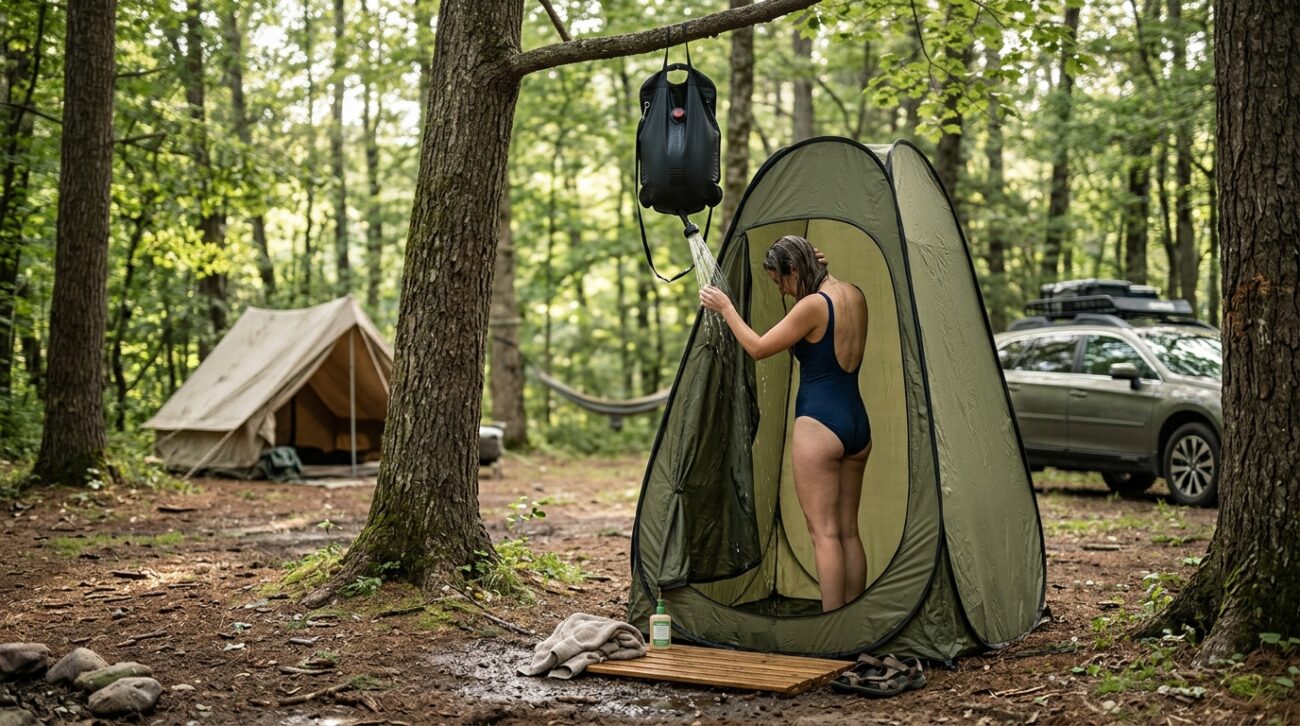
Staying clean while camping is one of those topics that divides people into two camps — those who think a little dirt is part of the experience, and those who need a proper rinse to actually enjoy the outdoors. The good news is that showering while camping is far more achievable than most beginners expect, and you do not need a fancy RV or a campground with full facilities to make it happen.
Whether you are car camping with the family, backpacking through remote trails, or pulling up to a campsite with hookups, there is a showering method that fits your situation. This guide covers every option, from simple solar camp showers to backcountry sponge baths, so you can stay fresh no matter where the trail takes you.
Featured Snippet Answer
Showering while camping can be done with a solar shower bag, a portable propane shower, a pump shower, or a basic bucket-and-cup rinse. Fill a dark bag with water and leave it in the sun for two to four hours for warm water. Always use biodegradable soap and shower at least 200 feet from any natural water source to protect the environment.
Why Staying Clean Matters on a Camping Trip?
Hygiene while camping is about more than comfort. Washing off sweat, sunscreen, and bug spray reduces skin irritation, prevents bacterial buildup, and helps you sleep better. For longer trips, poor hygiene can lead to fungal infections, rashes, and hotspots — particularly in warm weather.
Beyond personal health, staying reasonably clean also protects the environment. Soap residue, food particles on skin, and strong scents can attract wildlife, which creates safety concerns in bear country and disturbs local ecosystems. So hygiene is not just a comfort consideration — it is a safety and environmental responsibility.
Types of Camping Showers Explained
There are several ways to shower while camping, and the right choice depends on your trip type, group size, and how much gear you are willing to carry.
Solar Camp Shower Bags
These are the most popular and affordable option. A solar shower is a black PVC or nylon bag that you fill with water and leave in direct sunlight for several hours. The dark material absorbs heat and warms the water to a usable temperature — typically between 100°F and 110°F on a sunny day. Most bags hold 5 to 10 gallons and include a small showerhead nozzle. They cost between $10 and $30 and work well for car camping where you have time to heat water throughout the day.
Portable Propane-Powered Showers
Brands like Zodi and Camplux make compact propane camp showers that heat water on demand. These are faster and more reliable than solar bags in cloudy weather, and they deliver a more consistent water temperature. They work by drawing water from a bucket or reservoir and pushing it through a heating element. These are heavier and more expensive, ranging from $80 to $200, but they are excellent for family camping or extended trips where comfort matters.
Battery-Powered Shower Pumps
A battery-powered camp shower pump is a small submersible pump you drop into any water source — a bucket, a river, or a collapsible water container. It pushes water up through a hose and showerhead. The Nemo Helio pressure shower is a well-known example and uses a foot pump instead of a battery. These are lightweight and great for overlanding and van camping.
Campground Shower Facilities
Many established campgrounds, particularly state parks and national forest campgrounds with amenities, have communal shower houses. These are typically coin-operated or included with your campsite fee. If cleanliness is a priority, booking a campsite with shower facilities is the simplest solution.
Gym or Truck Stop Showers
For road trip camping or van life, a membership at a national gym chain like Planet Fitness gives you access to showers at hundreds of locations. Truck stops such as Pilot Flying J and Love’s Travel Stops also offer private showers for a small fee, usually around $12 to $15.
How to Shower When Camping Without Any Gear?
You do not necessarily need a camp shower product to get clean. Several practical methods work with minimal or no equipment.
A simple bucket and cup rinse — sometimes called a cowboy shower — involves filling a container with heated water and using a cup to pour it over yourself. This uses very little water and works effectively when you take your time and rinse strategically. Heat your water in a pot over a camp stove for warm water access regardless of weather.
A wet washcloth or camp towel can also cover a lot of ground. Focusing on key areas — underarms, feet, groin, and face — keeps body odor manageable between full rinses. This method is popular among thru-hikers who carry minimal gear but still want to feel human at the end of a long day.
If you are near a natural water source like a river, lake, or stream, a quick dip can rinse off sweat and grime effectively. Just make sure to use biodegradable soap only, and only if regulations allow it in that area.
Best Practices for Showering at a Campsite
Where and how you shower matters as much as the method you choose. A few ground rules make the process smoother and more responsible.
Set up your shower area at least 200 feet (about 70 adult steps) away from any water source. This prevents soap and greywater from entering streams or lakes. Use a biodegradable, phosphate-free soap like Dr. Bronner’s, which is a favorite among campers for its versatility and environmental safety.
Use a camp shower enclosure or privacy tent if you are at a shared campsite. These are lightweight pop-up shelters that give you privacy and contain water runoff in one spot. Pair it with a portable shower mat to keep your feet off the ground.
Scatter your greywater over a wide area away from camp rather than dumping it in one spot. This speeds up natural absorption and reduces the impact on soil and plant life.
Solar Showers vs. Portable Camp Showers: A Quick Comparison
| Feature | Solar Shower Bag | Propane Camp Shower |
| Cost | $10 – $30 | $80 – $200 |
| Water Heating | Sunlight (2-4 hours) | On-demand |
| Weight | Very light | Moderate to heavy |
| Water Volume | 5-10 gallons | Continuous |
| Best For | Car camping, fair weather | Family trips, all-weather |
| Ease of Use | Very simple | Moderate setup |
Leave No Trace Principles and Bathing Outdoors
The Leave No Trace (LNT) framework provides clear guidance on outdoor hygiene. Principle 3 — Dispose of Waste Properly — directly addresses washing and bathing. The core rules are simple: use biodegradable soap, bathe at least 200 feet from water sources, and scatter greywater broadly over vegetation.
Never wash dishes or yourself directly in a river or lake, even with soap labeled as biodegradable. Biodegradable products still need soil organisms to break them down, and aquatic ecosystems do not have those organisms in the same way terrestrial soil does. [EXTERNAL LINK: Leave No Trace Center for Outdoor Ethics]
Showering Tips for Backpacking vs. Car Camping
The approach to showering shifts significantly depending on your camping style.
For backpackers, weight is everything. Carrying a full solar shower bag is impractical on a multi-day trail. Instead, most backpackers rely on a small 2-liter collapsible bag with a showerhead attachment, a damp washcloth method, or natural water sources with minimal biodegradable soap. Dry shampoo and no-rinse bathing wipes are also popular for reducing the need for full washes.
For car campers, comfort is more achievable. You can afford to bring a larger solar shower, a privacy shelter, a folding shower mat, and multiple water containers. Planning your water use in advance — typically 3 to 5 gallons per person per shower — ensures you do not run short.
How to Stay Fresh Between Showers While Camping?
Even when a full shower is not possible, you can manage body odor and comfort with a few smart habits.
Moisture-wicking and merino wool base layers naturally resist odor buildup compared to cotton fabrics. Changing your socks daily is one of the highest-impact hygiene habits on a camping trip. Foot hygiene is often overlooked but directly affects comfort and blister prevention.
No-rinse body wipes like those from Sea to Summit or Surviveware are popular among campers and hikers. They remove sweat, dirt, and bacteria without requiring any water. Keep them in your day pack for post-hike freshening.
Dry shampoo works well for managing greasy hair on longer trips. It absorbs oil and refreshes your scalp without water. For a budget alternative, a small amount of baby powder or arrowroot powder works similarly.
A small bottle of hand sanitizer, while not a substitute for soap and water, helps keep your hands clean before meals when a water source is not nearby.
Conclusion
Showering while camping does not require sacrificing comfort or leaving your hygiene standards at the trailhead. With the right method — whether that is a solar bag, a propane shower, a bucket rinse, or simply a pack of no-rinse wipes — staying clean is entirely manageable on any type of camping trip.
The most important things to remember are to use biodegradable products, keep your wash area far from natural water sources, and plan your water supply in advance. Once you have a system that works for your setup, camp hygiene becomes second nature.
Ready to upgrade your camp shower setup? Browse our recommended camping hygiene gear and build a kit that fits your style of adventure.
FAQs
Can you shower at a campsite without a camp shower?
Yes. A bucket of heated water and a cup or ladle is an effective low-tech method. You can also use wet wipes, a damp washcloth focused on key body areas, or a quick rinse in a nearby stream if regulations allow it.
How do you heat water for a shower while camping?
The most common method is a solar shower bag left in direct sunlight for two to four hours. You can also heat water on a camp stove in a pot and transfer it to a bag or bucket. Propane-powered camp showers heat water on demand.
What soap is safe to use when camping outdoors?
Use biodegradable, phosphate-free soap such as Dr. Bronner’s Castile Soap. Even biodegradable soap should not be used directly in natural water bodies — always wash at least 200 feet from streams, lakes, or rivers.
How much water do you need for a camp shower?
A typical camp shower uses between 2.5 and 5 gallons of water per person. You can reduce this significantly by wetting down, turning off the flow while soaping up, and then rinsing quickly — similar to a navy shower technique.
Is it safe to shower in a river or lake while camping?
Swimming in a river or lake is generally fine. Using soap directly in a natural water body, however, is not recommended even with biodegradable products. Soap disrupts aquatic ecosystems regardless of the formula. Rinse off near the shore with a container of water instead.
What is the best portable shower for camping?
For car camping, a 5-gallon solar shower bag offers excellent value and ease of use. For family trips or longer stays, a propane-powered portable shower like the Camplux 5L provides consistent hot water. For backpacking, a lightweight 2L solar bag or a Nemo Helio pressure shower is a practical choice.
How do you keep clean while backpacking for multiple days?
Focus on daily wipe-downs with no-rinse body wipes, change into dry base layers each evening, use dry shampoo for hair, and take brief rinses at water sources when available. On longer trips, plan at least one proper wash every two to three days using a minimal-water solar bag method.
