
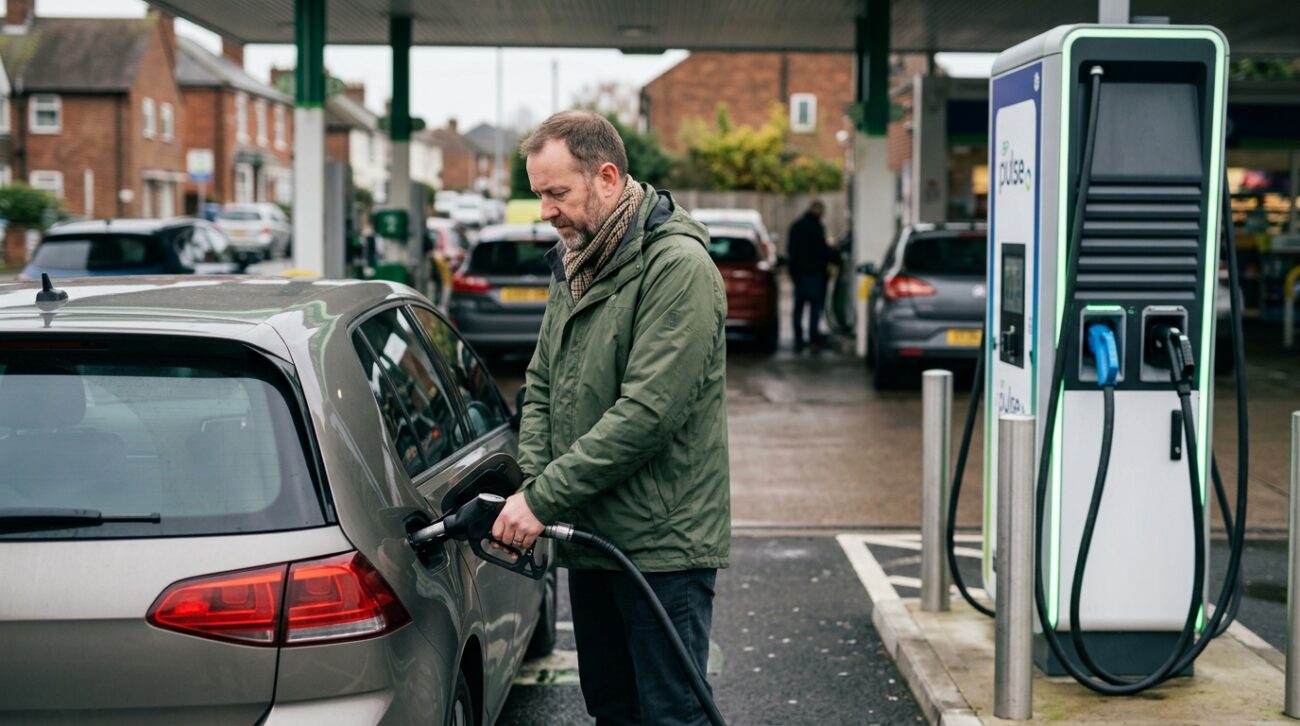
The UK government has set an ambitious target: by 2035, all new cars sold must be zero-emission. That deadline is closing in fast — and yet millions of British drivers are showing no urgency whatsoever to make the switch to electric vehicles. The gap between policy ambition and public behaviour has never been wider.
This is not simply a case of stubbornness or technophobia. The reasons UK drivers are delaying the electric vehicle transition are rooted in legitimate financial concerns, practical frustrations, and a growing distrust of policy consistency. Understanding these barriers — in full — is the only way to address them honestly.
The Scale of EV Hesitation in the UK
Electric vehicle sales in the UK have grown year on year, but the rate of adoption among private buyers remains sluggish. Fleet and company car registrations account for a disproportionately large share of EV sales, meaning the average consumer — someone buying with their own money — is far more hesitant than headline figures suggest.
Surveys conducted by motoring organisations consistently show that the majority of UK drivers still plan to buy a petrol or diesel car as their next vehicle. A significant portion say they may consider hybrid as a stepping stone, but full battery electric vehicles remain a difficult sell for a large segment of the population.
This hesitation is not irrational. It reflects a set of genuine, compounding obstacles that policy alone has not managed to resolve.
Cost Remains the Biggest Barrier
The upfront purchase price of an electric vehicle is still considerably higher than its petrol equivalent. While running costs — electricity versus fuel, lower servicing needs — are often cheaper over time, the initial outlay puts EVs out of reach for many working households.
The average new electric car in the UK costs significantly more than the average new petrol car. For buyers who stretch their budget to afford a vehicle, this difference is not marginal — it is decisive. The Plug-in Car Grant, which once helped bridge this gap, was scrapped for most private buyers in 2022, removing a meaningful incentive at exactly the wrong time.
Financing costs compound the problem. Higher vehicle prices mean larger loans, and with interest rates elevated over recent years, monthly repayments on an EV can be notably steeper than on an equivalent petrol model.
For drivers on middle or lower incomes — who cannot claim company car tax benefits and do not have off-street parking for a home charger — the financial case for going electric simply does not add up yet.
Range Anxiety and Charging Infrastructure Gaps
Range anxiety remains one of the most frequently cited concerns among drivers considering an EV. While modern electric vehicles often offer ranges well above 200 miles on a single charge, the fear of running out of power — particularly on unfamiliar routes or long motorway journeys — persists.
This anxiety is partly psychological, but it is also rooted in real experience. The UK’s public charging network, while growing, is still uneven in quality and distribution. Rural areas remain significantly underserved. Motorway service stations have improved in recent years, but reliability continues to be a genuine concern, with broken or out-of-service chargers reported frequently by existing EV drivers.
Charging speed matters too. Many public chargers available to drivers without home charging capacity are slow units — taking several hours to deliver a meaningful charge. Rapid and ultra-rapid chargers are available, but are not yet ubiquitous enough to replicate the experience of a five-minute petrol station stop.
For drivers who live in flats, terraced houses, or any property without a driveway, the home charging advantage disappears entirely. Overnight top-ups — one of the main reasons EV ownership works well for those who have it — are simply not an option for a large segment of the UK population.
The Second-Hand EV Market Isn’t There Yet
Most people in the UK buy used cars, not new ones. The used electric vehicle market is still maturing, and several factors make second-hand EV purchases riskier or less appealing than buying a used petrol car.
Battery degradation is a key concern. Buyers worry about purchasing a used EV only to discover the battery holds significantly less charge than it did when new — and that replacing or reconditioning that battery could cost thousands of pounds. Unlike a used petrol engine, where buyers have decades of knowledge and reliable diagnostics to lean on, battery health assessment is less standardised and less understood by the general public.
Residual values for used EVs have also been volatile. Several models have seen steep depreciation, which while good for buyers in theory, creates uncertainty and undermines the confidence needed to commit to a purchase.
Until the second-hand EV market offers the same clarity, reliability and value-for-money that used petrol cars provide, a large portion of UK drivers will continue to delay their transition.
Confusion Around Government Policy
One of the more damaging factors in slowing EV uptake has been inconsistency in government messaging and policy. Drivers are being asked to make a major financial commitment — often the second-largest purchase of their lives — based on signals from a government that has, in recent years, shifted its position multiple times.
The 2030 ban on new petrol and diesel car sales was announced, then pushed back to 2035 under the previous administration, then partially revised again. Each reversal creates doubt. If the policy deadline might move again, why rush?
Vehicle Excise Duty changes, the removal of purchase incentives, and uncertainty around future charging tariffs and taxation all contribute to a picture of policy instability. Drivers who might otherwise be ready to commit are understandably waiting to see the landscape settle before making a long-term investment.
Trust in the government’s long-term commitment to making EVs work — not just mandating their sale — has eroded among a meaningful proportion of drivers.
Lifestyle and Practical Concerns
Beyond cost and infrastructure, many drivers cite practical lifestyle factors that make an electric vehicle feel incompatible with their current situation.
Those who regularly tow caravans, trailers or horsebox vehicles worry that EV towing capacity and range reduction under load make electric impractical. Tradespeople with large, heavy loads question whether current EV vans meet their working needs. Drivers who regularly cover high annual mileage across varied terrain feel that the unpredictability of range in cold weather or at motorway speeds introduces too much complexity into journeys that currently run without a second thought.
Cold weather performance is a recurring concern. Battery range drops noticeably in winter temperatures — a factor that matters considerably in Scottish Highlands, northern England, and rural Wales, where distances are greater and charging options are thinner.
These are not invented excuses. They are practical realities that apply to a genuine segment of the driving population, and dismissing them as technophobia does nothing to move the conversation forward.
What Would Actually Change Minds?
When UK drivers are asked what would push them towards an electric vehicle, the answers cluster around a few consistent themes.
A meaningful reduction in purchase price — either through manufacturer competition, government incentives, or both — is cited most frequently. A reliable, nationwide charging network with a high proportion of fast chargers and a standardised payment system comes second. Clearer, more stable government policy that gives buyers confidence in their long-term investment runs close behind.
Greater transparency around battery health on used vehicles, combined with more affordable battery warranty or insurance products, would also build confidence in the second-hand market. For drivers without home charging, subsidised solutions — whether on-street chargers, landlord incentives, or shared community charging — are essential.
The technology itself is not the problem. Most drivers who have experienced a test drive of a modern EV come away impressed. The barriers are structural, financial and infrastructural — and they are solvable, but only with coordinated, sustained action.
Conclusion
The UK’s transition to electric vehicles is not failing — but it is stalling, and the reasons why deserve a straight answer rather than optimistic spin. UK drivers delaying the electric vehicle transition are not being irrational. They are responding to high prices, patchy infrastructure, inconsistent policy, and practical barriers that have not yet been adequately addressed.
Closing the gap between the 2035 target and current driver behaviour requires more than a deadline. It requires affordable vehicles, a charging network people can actually rely on, and a government that commits to a consistent direction over the long term.
If those conditions are met, the transition will accelerate naturally. Until they are, hesitation will remain the entirely logical default for millions of British drivers.
If you found this article useful, consider sharing it with other drivers weighing up the switch — or exploring our related guides on home EV charging options and the true cost of electric vehicle ownership.
FAQs
Why are UK drivers reluctant to switch to electric vehicles?
The main reasons include the high upfront purchase cost of EVs compared to petrol cars, concerns about charging infrastructure reliability, range anxiety, uncertainty over government policy, and practical issues for drivers without home charging access. These barriers are real and interconnected, making the decision to switch feel financially and logistically risky for many households.
Is the UK charging network good enough for electric vehicles?
It is improving, but it is not yet sufficient for widespread private adoption. Rural areas remain underserved, charging reliability at public points is inconsistent, and drivers without driveways have limited options for convenient home charging. The network needs significant further investment before it can fully support mass EV ownership.
What happened to the UK government’s 2030 petrol and diesel car ban?
The original 2030 ban on new petrol and diesel car sales was pushed back to 2035 by the previous Conservative government. This created confusion and reduced urgency among buyers who felt the policy timeline was unstable and potentially subject to further change.
Are electric vehicles cheaper to run than petrol cars in the UK?
Generally, yes — electricity costs per mile are lower than petrol, and EVs have fewer mechanical components requiring servicing. However, public charging is considerably more expensive than home charging, and for drivers without home charging access, the running cost advantage is much reduced or eliminated.
Is it worth buying a second-hand electric vehicle in the UK?
It can be, but buyers need to assess battery health carefully before purchasing. Battery degradation affects range, and replacement costs can be significant. The used EV market is maturing, and more standardised battery health reporting is emerging, but caution is still warranted compared to buying a used petrol vehicle.
