
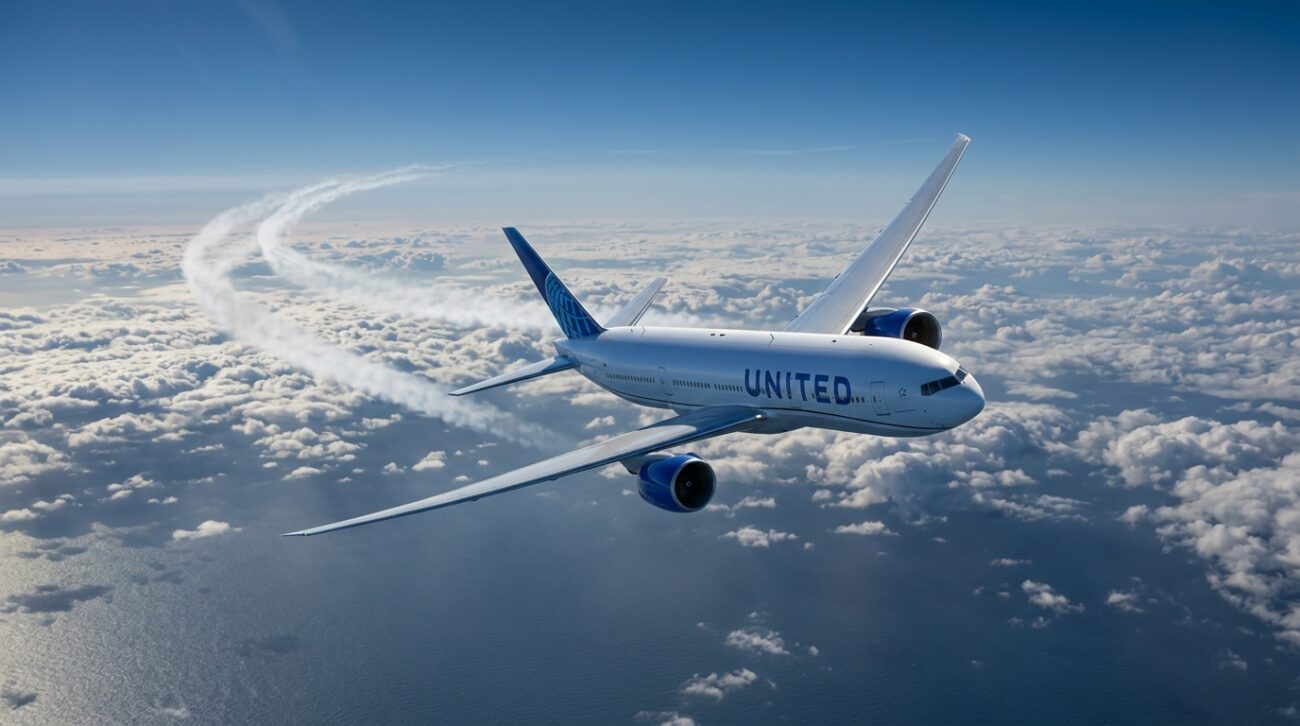
On October 30, 2025, thousands of aviation enthusiasts watching flight trackers online saw something unexpected. United Flight UA109, operating a standard Munich-to-Washington Dulles route over the North Atlantic, suddenly executed a U-turn over open ocean and headed east toward Ireland instead of west toward the United States.
No engine was on fire. No storm was closing in. No security alert had been issued. The aircraft, a Boeing 787-8 Dreamliner, was mechanically perfect. What followed became one of the most-discussed flight diversions of 2025, not because it was dramatic, but because of how surprisingly ordinary the root cause turned out to be.
The United Flight UA109 diversion is a clear window into how modern aviation actually works behind the scenes, and why the rules that govern crew health and safety exist in the first place.
What Is United Flight UA109?
United Flight UA109 is a long-haul international service typically operated with a Boeing 787-8 Dreamliner, designed for maximum efficiency and comfort on extended flights. The route connects Munich, Germany (MUC) to Washington Dulles International Airport (IAD) in the United States, typically covering the distance in eight to nine hours. The route serves business travelers, tourists, and government officials crossing between Central Europe and the U.S. East Coast.
This is not a short regional hop. It is a demanding, multi-hour transatlantic crossing where crew availability and physical capability are subject to strict regulatory minimums. That context is what makes the October 30 incident so significant from a regulatory perspective.
What Happened During the UA109 Diversion?
On October 30, 2025, United Airlines Flight UA109, operated by a Boeing 787-8 Dreamliner with registration N28912, was diverted to Dublin Airport after a crew member experienced a medical emergency mid-flight. The flight had departed from Munich at 9:00 AM local time and was en route to Washington Dulles when the aircraft turned back over the North Atlantic, approximately 500 to 600 nautical miles west of Ireland.
The diversion was not caused by mechanical failure, security concerns, or passenger issues. The aircraft itself was functioning normally throughout the incident.
When aviation enthusiasts saw the U-turn on tracking apps, many assumed a catastrophic failure. The reality was far more nuanced, and in some ways, more instructive about how safety-first aviation genuinely operates.
The Real Cause: Why a Blister Grounded a Transatlantic Flight?
This is the part of the story that surprised people the most. The aircraft was cruising normally when a flight attendant reported a worsening medical issue, specifically pain from a blister, which made it difficult for them to continue with the rest of the nine-hour flight.
To many passengers, a blister sounds trivial. But aviation law does not measure severity by everyday standards. Aviation regulations treat crew incapacitation seriously. Crew members are trained safety professionals responsible for evacuations, fire response, first-aid coordination, and passenger management. Without sufficient fit crew, the flight could not legally continue.
Aviation regulations require a minimum number of working crew members on board during a flight. If one becomes unable to perform their duties, the aircraft may need to land at the nearest suitable airport. If the number of available crew drops below the required level, continuing the journey could violate aviation safety regulations.
This is the core reason the diversion happened. The captain did not make an emotional call. He made a regulatory one. Pressing on to Washington Dulles with a crew member unable to physically perform safety duties would have put the entire flight out of legal compliance. That is simply not an option in commercial aviation.
Why Dublin Airport Was the Right Choice?
Dublin was not a coincidence. Airlines use Dublin Airport as one of the primary alternate airports for diversions on transatlantic flights, thanks to its strategic location and modern infrastructure. Dublin Airport holds ETOPS certification, meaning it serves as an officially designated backup landing site for aircraft flying over remote regions or long stretches of ocean, as with many transatlantic flights.
As an ETOPS alternate, Dublin is well-equipped to accommodate wide-body aircraft like the Boeing 787-8. The airport has the necessary medical facilities, ground support, and customs processing capabilities to handle emergency landings efficiently. Its location along a major transatlantic route ensures that it is within range for aircraft needing to divert due to in-flight emergencies.
Dublin Airport maintains access to professional emergency medical services around the clock. Ground-based medical teams can meet diverted aircraft immediately on landing, which was critical given the nature of the UA109 situation.
In short, before UA109 even departed Munich that morning, Dublin was already logged as a designated alternate. The diversion was not improvised. It was a pre-planned safety procedure executed in real time.
The Complete Timeline of the Diversion
Here is a breakdown of the key events on the day of the diversion:
12:14 PM CET: United Flight UA109 departs from Munich Airport. Approximately three hours into the flight, the crew member experiences severe discomfort due to a foot blister.
3:00 PM GMT: The aircraft diverts and lands at Dublin Airport. Between 3:00 PM and 4:20 PM, the crew member receives medical attention and the necessary operational adjustments are made.
4:20 PM: The flight departs Dublin and continues its journey to Washington Dulles. 6:15 PM local time: Flight UA109 arrives at Washington Dulles, just over two hours later than scheduled.
Two hours of total delay across a transatlantic diversion. That is a remarkably efficient outcome, and it reflects the preparedness of both United Airlines and Dublin Airport’s ground teams.
How Passengers Were Affected?
Passengers on the flight felt a mix of surprise and worry when they learned about the diversion. Many people were confused at first because they did not know what was happening. Some were watching movies, some were eating, and others were sleeping when the announcement came. But the crew did a great job keeping everyone calm. They explained that the diversion was for safety and that everything was under control.
No emergency procedures were needed, and refreshments were provided. The total delay was approximately two hours, with the flight continuing safely to Washington.
After a medical assessment was completed and the crew member was deemed stable, the aircraft was cleared to continue its journey to Washington. The flight attendant, although in discomfort, did not require hospitalization upon arrival in Dublin.
Passengers with connecting flights at Dulles would have faced the most disruption, and airlines are generally required to arrange alternative connections in such cases at no additional cost to the traveler.
ETOPS Rules and Why Minimum Crew Regulations Matter
Understanding this diversion properly requires understanding two regulatory frameworks.
ETOPS (Extended-range Twin-engine Operational Performance Standards) governs where and how twin-engine aircraft like the 787 Dreamliner can fly over water. These regulations require aircraft to remain within a certain distance of suitable diversion airports. Dublin Airport serves as one of the most common diversion airports for transatlantic flights. Airlines often select it as an alternate airport when flying between Europe and North America.
Minimum crew regulations are equally binding. The number of cabin crew required on a long-haul flight is not arbitrary. Each crew member is trained to manage specific safety functions. A severe enough medical condition that prevents a crew member from physically executing those duties triggers the same response as a missing crew member: the flight cannot legally continue in its current configuration.
Crew members are trained safety professionals responsible for evacuations, fire response, first-aid coordination, and passenger management. Without sufficient fit crew, the flight could not legally continue. The diversion ensured regulatory compliance and passenger safety.
These two frameworks together explain everything about the UA109 decision. The captain had no discretion in the matter. Regulatory compliance required the diversion.
What This Diversion Reveals About Modern Aviation Safety?
This event underscores the importance of airline protocols for crew member health and safety. Airlines are required to follow strict regulations to ensure that flights operate with the necessary number of crew members to handle emergency situations. United Airlines’ quick response and efficient management of the situation serve as a reminder of the importance of having well-trained personnel who can make difficult decisions.
There is a broader lesson here for the flying public. Most people associate flight diversions with dramatic events: engine failures, smoke in the cabin, violent turbulence. The UA109 incident is a reminder that aviation safety works on a much more granular level. Rules exist not just for catastrophes but for the small deviations that, left unaddressed, can cascade into larger problems.
Diversions often trigger concern, but most are precautionary rather than due to immediate danger. UA109’s diversion was regulatory, not life-threatening, demonstrating the proactive nature of aviation safety measures.
The system worked exactly as designed. A crew member reported a problem. The captain assessed the situation. Regulations were applied. The aircraft diverted to the designated alternate. Medical care was provided. The flight resumed. No one was harmed.
That is not a failure story. That is a success story.
Conclusion
The United Flight UA109 diversion on October 30, 2025, was not a near-miss. It was not a crisis. It was the aviation safety system performing exactly as intended.
A crew member experienced a painful medical condition. The captain applied the regulations. Dublin was selected as the ETOPS-certified alternate. The Boeing 787-8 landed without incident. Medical care was provided. The flight continued two hours later.
What looks dramatic on a flight tracker is, in most cases, evidence of an industry that has built contingency into every phase of every flight. For passengers who were on board that day, the experience was disorienting at first. But they arrived safely in Washington. That outcome is not accidental. It is the direct result of the frameworks, training, and decision-making culture that define commercial aviation at its best.
If you fly transatlantic routes regularly, the UA109 diversion is worth understanding. It shows that the rules exist not just on paper but in the cockpit, in real time, under pressure, over open water. And when they are followed correctly, everyone gets where they are going.
FAQs
What caused the United Flight UA109 diversion?
The cause was a medical condition affecting a cabin crew member, specifically a severe foot blister that caused intense pain, preventing the individual from standing or moving normally. The captain determined the flight could not legally continue to Washington Dulles without a full complement of fit crew members.
Why did UA109 divert to Dublin specifically?
Dublin Airport is a well-equipped ETOPS alternate airport for transatlantic routes. It is strategically positioned to handle medical emergencies and provide swift support for diverted flights. Its location along the North Atlantic corridor made it the closest and most suitable option given where the aircraft was when the decision was made.
Was there any mechanical problem with the aircraft?
No. The diversion involved no mechanical failure, no security threat, and no passenger medical emergency. The Boeing 787-8 Dreamliner remained fully operational throughout.
How long was the total delay caused by the diversion?
The aircraft eventually arrived at Washington Dulles International Airport at 6:30 PM local time, experiencing a delay of approximately two hours. Given that the flight completed a full mid-Atlantic U-turn and made an unscheduled stop in Dublin, a two-hour delay is a remarkably short disruption.
Are flight diversions common on transatlantic routes?
Diversions occur regularly in commercial aviation, though most passengers will never experience one. Medical situations, whether involving passengers or crew, are one of the leading causes. A small percentage of flights divert each year, with medical causes accounting for many. UA109 highlights the human factor in aviation safety, with crew fitness integral to legal and operational compliance.
