
Introduction
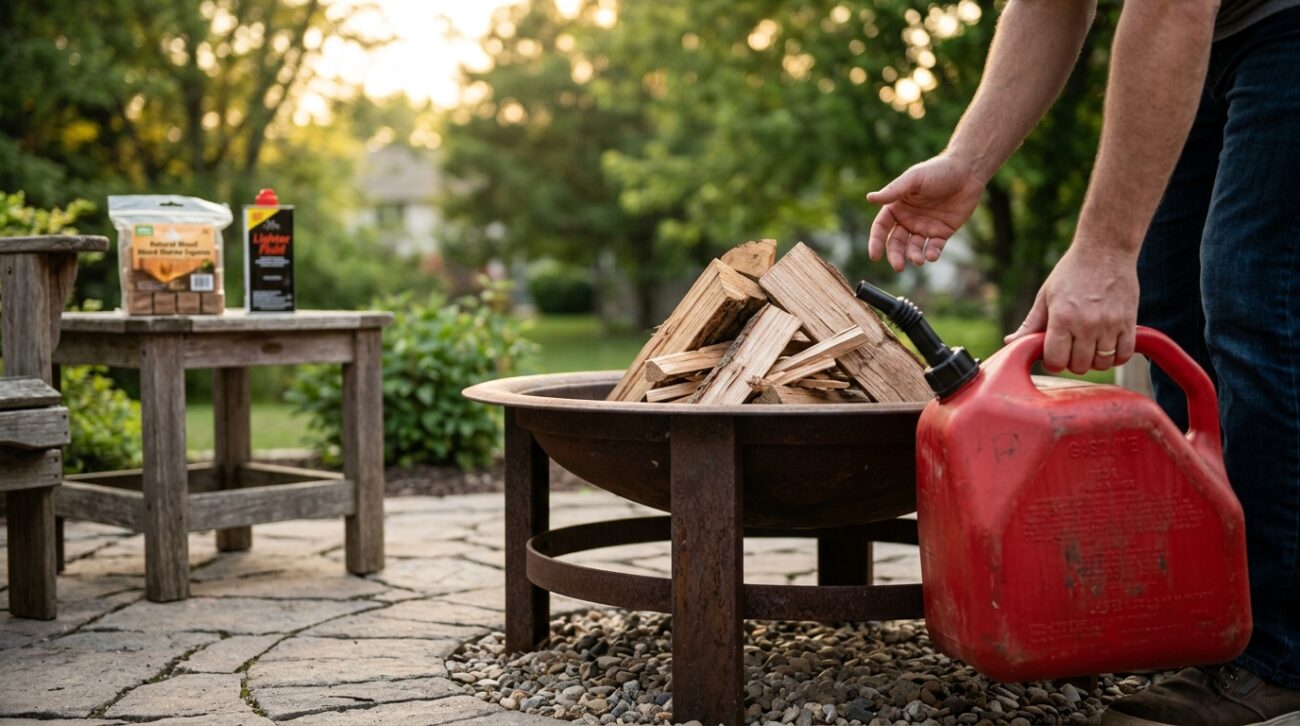
Every summer, thousands of backyard fire pit accidents are caused by one common mistake: using the wrong fuel. And at the top of that list is gasoline. If you have ever wondered whether using gasoline for a fire pit is a good idea to get the flames going faster, you are not alone. But here is what you need to know before you ever reach for that gas can.
Gasoline is not a fire starter. It is an accelerant, and an extremely volatile one at that. The difference between those two things could mean the difference between a great evening outdoors and a life-altering emergency. This guide covers everything you need to know about gasoline and fire pits, including what happens chemically, why the risk is never worth it, and what safe alternatives actually work.
Why People Consider Using Gasoline for a Fire Pit?
It seems logical on the surface. Gasoline burns. Fire pits need fuel. Put the two together and you get fire, right? The appeal usually comes down to convenience and speed. People want a fire that starts quickly without a lot of effort, especially when wood is damp or kindling is scarce.
Others have seen someone else do it without an obvious accident and assume it is a manageable risk. That assumption is one of the most dangerous misconceptions in outdoor fire safety. Just because something did not go wrong the first time does not mean it is safe.
What Actually Happens When You Use Gasoline in a Fire Pit?
When gasoline is poured into or near a fire pit, it does not simply burn cleanly like firewood. Gasoline is a highly refined, complex hydrocarbon mixture designed for combustion inside controlled engine environments. In open air, it behaves completely differently.
The liquid gasoline itself does not ignite. What burns is the vapor it releases. And gasoline releases vapor almost instantly, even in relatively cool temperatures. Those vapors spread rapidly across the ground and surrounding air, far beyond the boundaries of the fire pit.
When a flame or spark reaches that invisible vapor cloud, the combustion does not happen just at the fire pit. It happens wherever the vapor has traveled. This creates a sudden, explosive flash fire that can engulf clothing, skin, and nearby materials in an instant.
Even more dangerous is the backdraft effect. If you pour gasoline while any ember or heat remains in the fire pit, the flame can travel up the stream of liquid directly into the container in your hand. This is how gasoline cans explode.
The Real Dangers of Gasoline Around Open Flames
The statistics around gasoline-related fire injuries are not minor. According to the U.S. Consumer Product Safety Commission, thousands of people are treated in emergency rooms each year for burns related to the misuse of flammable liquids, with gasoline being the leading cause.
The specific dangers include:
- Flash fires: An instantaneous explosion of flame across the vapor cloud, burning everything in its path before you can react
- Severe burns: Gasoline burns are often deep, covering large surface areas because the fire spreads faster than a person can move away
- Exploding containers: Pouring from a gas can near flame creates a direct ignition path back to the container
- Residual fuel ignition: Even after you think the gasoline has burned away, residue left in cracks or on surfaces can reignite unexpectedly
- Toxic fumes: Burning gasoline releases benzene, carbon monoxide, and other toxic compounds that are dangerous to inhale
Burns caused by gasoline tend to be third-degree burns, which destroy all layers of skin and often require skin grafting, extended hospitalization, and months of recovery. They are not minor injuries.
Is It Ever Safe to Use Gasoline for a Fire Pit?
No. There is no context in which using gasoline for a fire pit is safe. This is not an exaggeration. Fire safety professionals, burn centers, and outdoor safety organizations universally agree that gasoline should never be used as a fire starter or accelerant in any open-air fire setting.
Some people draw a comparison to other flammable liquids and wonder whether gasoline is really worse than, say, lighter fluid. It is. Lighter fluid is engineered to have a higher flash point and a more controlled burn rate specifically for fire-starting purposes. Gasoline has a flash point of around negative 45 degrees Fahrenheit, meaning it produces ignitable vapor even in extreme cold. Lighter fluid is far less volatile by comparison.
There is also no amount of gasoline that is considered a safe quantity for fire pit use. Even a small splash creates enough vapor for a dangerous flash.
Safe and Effective Fire Pit Fuel Alternatives
The good news is that you do not need gasoline to start a strong, fast fire. Several options work better and carry no explosion risk.
Seasoned Firewood Dry, well-seasoned hardwood like oak, maple, or ash burns cleanly and consistently. It is the best long-term fuel for any wood-burning fire pit. Wood that has dried for at least six months ignites far more easily than fresh-cut wood.
Newspaper and Cardboard Crumpled newspaper or torn cardboard placed under your kindling creates a reliable fire-starting base without any chemical risk. It lights easily with a single match and burns long enough to get kindling going.
Commercial Fire Starters Wax-based fire starters, fatwood sticks, and firelighter cubes are inexpensive, widely available, and designed specifically for this purpose. They carry none of the vapor explosion risk of liquid accelerants.
Lighter Fluid (Used Correctly) When used as directed on a cold, unlit fire pit, lighter fluid is a far safer option than gasoline. Apply it before lighting, allow a brief moment for some absorption into the material, then light from a safe distance with a long match or extended lighter.
Propane and Natural Gas Fire Pits If convenience is your main concern, a gas-powered fire pit eliminates the fire-starting process entirely. These units use controlled gas lines with built-in ignition systems, producing clean and safe flames on demand.
How to Properly Start a Fire Pit Without Gasoline?
Starting a fire pit correctly takes about five minutes and requires no dangerous chemicals. Follow these steps:
- Clear the fire pit of ash and debris from previous fires
- Place a base layer of crumpled newspaper or a commercial fire starter in the center
- Add kindling in a teepee or log-cabin arrangement over the base layer. Use small, dry sticks or split wood pieces
- Stack two or three small logs loosely over the kindling, leaving space for airflow
- Light the base layer using a long-reach lighter or match, igniting from multiple points around the edge
- Allow the kindling to catch before adding larger logs. Do not rush this step
- Add larger fuel gradually as the fire establishes itself
This method works reliably every time when your wood is properly dried. If your wood is slightly damp, a fatwood stick or wax fire starter makes the process even more forgiving.
Fire Pit Safety Rules Everyone Should Follow
Beyond avoiding gasoline, fire pit safety covers several other important areas that reduce risk for everyone nearby.
Keep a water source close. A bucket of water or a garden hose within arm’s reach lets you respond to any unexpected spread immediately.
Maintain clearance around the pit. The National Fire Protection Association recommends keeping fire pits at least ten feet from structures, fences, overhanging branches, and other combustibles.
Never leave a fire unattended. Wind conditions can shift unpredictably. A fire that seemed contained can spread within seconds if conditions change.
Supervise children and pets strictly. Burns happen quickly. Establish a clear boundary around any active fire and enforce it consistently.
Fully extinguish before leaving. Pour water over the fire and stir the ash until all heat is gone and no steam rises. Embers can remain hot for hours and reignite.
Check local regulations. Many municipalities have seasonal burn bans or restrictions on residential open fires. Check before lighting, especially during dry periods.
Conclusion
Using gasoline for a fire pit is one of the most preventable causes of serious burn injuries in residential settings. The risk is not theoretical. It is the kind of danger that unfolds in less than a second and causes damage that lasts a lifetime. No fire starts faster or more reliably than a safe one built the right way.
Dry seasoned wood, quality kindling, and a commercial fire starter will get your fire pit burning beautifully every time without putting yourself or anyone nearby at risk. The few extra minutes it takes to do this properly are absolutely worth it.
FAQs
Can gasoline be used to start a fire pit?
No. Gasoline should never be used to start a fire pit. It releases explosive vapors instantly that can ignite into a flash fire far beyond the pit area. Even a small amount creates a serious burn risk. Use commercial fire starters, dry kindling, or newspaper instead.
What happens if you put gasoline in a fire pit?
If gasoline contacts heat, embers, or flame in or around a fire pit, it can ignite explosively. The vapor cloud created by spilled gasoline can flash across a wide area in a fraction of a second, causing severe burns to anyone nearby before they have time to react.
Is lighter fluid safer than gasoline for a fire pit?
Yes, significantly. Lighter fluid has a higher flash point and a more controlled burn rate, making it far less likely to cause a flash explosion. However, it should still be applied carefully before ignition and never added to an already-burning fire.
What is the best fuel for a fire pit?
Seasoned hardwood is the best fuel for a wood-burning fire pit. It burns cleanly, produces good heat, and is completely safe when handled properly. Fatwood sticks and wax-based fire starters are excellent supplements for ignition.
What should I do if gasoline accidentally ignites near a fire pit?
Move away from the area immediately and call emergency services. Do not attempt to throw water on a gasoline fire, as this spreads the burning liquid. If clothing catches fire, stop, drop, and roll. Treat any burn as a medical emergency requiring professional attention.
