
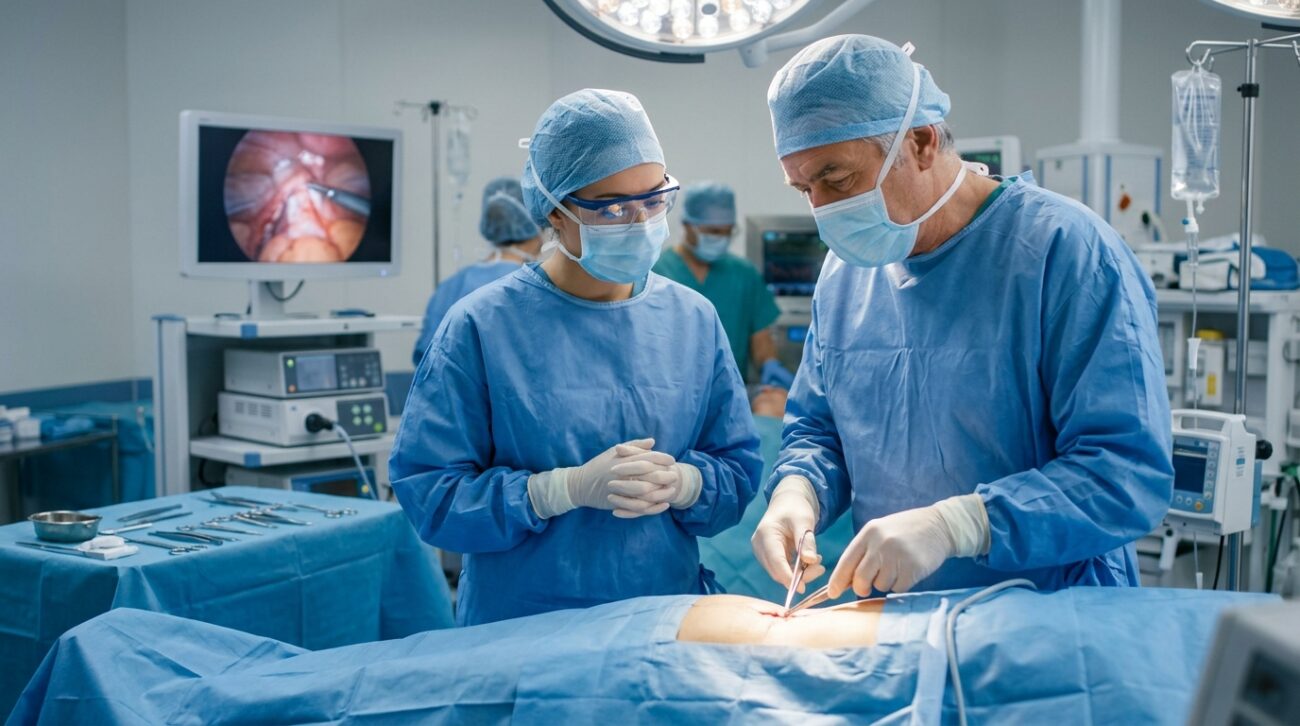
Core surgical training (CST) is a two-year postgraduate surgical program in the United Kingdom that bridges the gap between foundation training and higher specialist surgical training. It provides doctors with broad exposure to surgery across multiple specialties, builds essential operative competencies, and prepares trainees for the Membership of the Royal College of Surgeons (MRCS) examination. It is the standard entry route for most surgical specialty training in the UK.
What Is Core Surgical Training?
If you have recently completed your foundation years and want to pursue a career in surgery, core surgical training is almost certainly the path you will follow. It is the structured, nationally recognised program through which junior doctors develop the fundamental skills, knowledge, and professional behaviours expected of a surgeon.
The program sits at the ST1 and ST2 level of postgraduate medical training in the UK. It is run across NHS deaneries and training regions, with posts distributed through a national recruitment process managed by the Surgical Specialty Recruitment Office (SSRO).
The purpose of CST is not to make you a specialist. That happens later during higher surgical training (HST). Instead, core surgical training is designed to give you a solid, transferable foundation — one that will serve you regardless of which surgical specialty you eventually pursue.
Think of it as the common trunk from which surgical careers branch out.
How Core Surgical Training Is Structured?
Core surgical training lasts two years, divided into rotations across different surgical specialties. The specific structure varies by deanery, but most programs include exposure to at least three or four different surgical environments over the two-year period.
The two-year framework broadly looks like this:
- Year 1 (ST1): Introduction to core surgical competencies, ward-based surgical care, theatre exposure, and foundational procedural skills
- Year 2 (ST2): More complex operative involvement, increasing clinical responsibility, completion of MRCS Part A and Part B, and preparation for specialty applications
Each rotation typically lasts between four and six months. Trainees are expected to complete a range of workplace-based assessments (WBAs) throughout, including procedure-based assessments (PBAs), directly observed procedural skills (DOPS), mini-clinical evaluation exercises (mini-CEX), and case-based discussions (CBDs).
The curriculum is overseen by the Joint Committee on Surgical Training (JCST) and aligned with the Intercollegiate Surgical Curriculum Programme (ISCP), which trainees use as a portfolio platform to log their progress.
Entry Requirements and Application Process
Getting into core surgical training is competitive. Applications open once per year, and candidates are ranked nationally based on a combination of their portfolio, situational judgement, and interview performance.
Eligibility requirements typically include:
- Full registration with the General Medical Council (GMC)
- Completion of the UK Foundation Programme (or equivalent)
- Evidence of commitment to a surgical career
- Appropriate clinical experience in surgical settings
- A valid IELTS score if English is not your first language
The application process involves three main stages:
- Longlisting — based on eligibility criteria and a scored portfolio
- Shortlisting — portfolio score determines whether you are invited to interview
- Interview — structured multi-station assessment including clinical scenarios, portfolio discussion, and sometimes procedural tasks
Portfolio scoring is particularly important. Points are awarded for surgical audits, publications, presentations, teaching experience, relevant courses (such as ATLS, CCRISP, or Care of the Critically Ill Surgical Patient), and leadership roles. Candidates who invest time in building a strong surgical portfolio well before applying will have a meaningful advantage.
Allocation of posts is based on your national ranking combined with your preference for training regions. Popular deaneries such as London or Oxford tend to be more competitive.
What to Expect During Your Rotations?
The day-to-day experience of core surgical training varies depending on which specialty you are rotating through, but certain elements remain consistent throughout.
You will spend time on the wards managing pre- and post-operative patients, participating in outpatient clinics, attending theatre to assist and operate, and taking part in on-call duties. The on-call component is important — it builds your ability to assess and manage acute surgical presentations under pressure.
Common specialties included in CST rotations:
- General surgery
- Trauma and orthopaedics
- Urology
- Vascular surgery
- ENT (ear, nose, and throat)
- Colorectal surgery
- Upper gastrointestinal surgery
- Plastics and reconstructive surgery
Not every deanery includes every specialty. Some programs offer a more general surgery-heavy rotation; others provide broader exposure across multiple fields. When ranking your preferences during application, it is worth researching the rotation compositions of different deaneries carefully.
In theatre, what you do as a trainee depends heavily on your consultant and the complexity of the case. In a supportive environment, you may be performing appendicectomies, hernia repairs, or assisting in more complex procedures by the end of ST2. Operative exposure is tracked through your ISCP portfolio.
Exams and Assessments in CST
The primary examination during core surgical training is the MRCS — Membership of the Royal College of Surgeons. This is a two-part examination:
MRCS Part A A written exam consisting of two papers — applied basic sciences and principles of surgery in general. Most trainees sit this during ST1 or early ST2. It covers anatomy, physiology, pathology, pharmacology, and clinical science at a level appropriate for a broad surgical foundation.
MRCS Part B (OSCE) An objective structured clinical examination that tests clinical skills, communication, and applied knowledge across surgical scenarios. It is typically attempted after Part A has been passed and is widely regarded as the more challenging of the two. It must be passed to progress to higher surgical training.
In addition to the MRCS, trainees are assessed continuously through their portfolio. The ISCP platform requires trainees to log procedures, complete WBAs, gather multisource feedback, and meet with their educational supervisor regularly. Annual Review of Competence Progression (ARCP) panels assess whether trainees are meeting the expected curriculum milestones. Satisfactory ARCPs are required to progress from ST1 to ST2 and eventually to apply for higher training.
Other courses and qualifications that most trainees complete during CST:
- ATLS (Advanced Trauma Life Support)
- CCRISP (Care of the Critically Ill Surgical Patient)
- Basic Surgical Skills course (Royal College of Surgeons)
- ASSET course (optional but valued)
Core Surgical Training vs. Other Training Pathways
It helps to understand where CST sits relative to other routes into surgical practice.
| Pathway | Duration | Entry Level | Notes |
| Core Surgical Training (CST) | 2 years | Post-foundation | Standard UK route for most surgical specialties |
| Broad-Based Training (BBT) | 2 years | Post-foundation | Covers surgery, medicine, GP, and psychiatry |
| Run-Through Training | Specialty-specific | Post-foundation | Direct entry into specialty (e.g., neurosurgery, paediatric surgery) |
| IMT + ACCS | 3 years | Post-foundation | For acute medicine and emergency medicine, not surgery |
| Higher Surgical Training (HST) | 4–6 years | Post-CST | Specialty-focused, leads to CCT |
Some surgical specialties — notably neurosurgery and paediatric surgery — operate run-through training, meaning successful applicants go directly from foundation training into a single specialty program without needing CST. However, these are competitive and less common routes. For the vast majority of aspiring surgeons, CST is the starting point.
Life as a Core Surgical Trainee
Being honest about the lived experience of CST matters here, because it is not a straightforward or easy two years.
The hours can be long. Rota gaps, on-call commitments, and the demands of maintaining a portfolio on top of clinical work require genuine stamina. Competition for good operative experience can be high in busy departments, and the quality of training varies significantly between hospitals and supervisors.
At the same time, many trainees describe CST as one of the most formative periods of their career. You gain exposure to a breadth of surgical practice that you will not experience at any other stage. You develop clinical decision-making skills, build professional relationships, and begin to define your surgical identity.
Practical realities to plan for:
- You will likely need to study for MRCS outside of working hours
- Attending surgical skills courses requires annual leave in some trusts
- Your operative experience depends partly on being proactive — asking to be in theatre, staying late when a case comes in, demonstrating enthusiasm to your seniors
- Moving between hospitals across rotations disrupts continuity but broadens your exposure
Pay at ST1 and ST2 level is based on the NHS Agenda for Change framework for trainees, with additional supplements for out-of-hours and on-call work.
How to Progress After CST?
Completing core surgical training successfully does not automatically lead to higher surgical training. You must apply again — competitively — for specialty training at ST3 level.
The most common surgical specialties trainees apply to after CST:
- General surgery
- Trauma and orthopaedics
- Urology
- Vascular surgery
- Colorectal surgery
- Upper gastrointestinal and bariatric surgery
- Breast surgery
- Plastics and reconstructive surgery
- ENT surgery
- Oral and maxillofacial surgery (OMFS, requires dental degree)
Each specialty runs its own ST3 application process with its own scoring criteria. A strong MRCS, a well-documented ISCP portfolio, research or audit output, teaching experience, and targeted operative exposure in your chosen specialty will all strengthen your application.
Some trainees who are unsuccessful at ST3 take time out of programme (OOP) to gain additional experience, complete research, or pursue a fellowship. This is common and does not indicate failure — it often results in stronger applications in subsequent cycles.
Trainees who complete higher surgical training receive a Certificate of Completion of Training (CCT), which allows them to apply for consultant posts.
Conclusion
Core surgical training is the essential foundation of a surgical career in the UK. Over two years, it shapes the clinical skills, professional habits, and surgical mindset that trainees will carry into specialist practice for the rest of their careers. It demands hard work, strategic preparation, and genuine commitment — but for those who are serious about surgery, it is also an incredibly rewarding period of professional development.
If you are planning to apply, start building your portfolio early, get your ATLS done, seek out operative experience wherever you can find it, and approach the application process with the same rigour you would bring to your surgical training itself.
For authoritative guidance on the curriculum, application timelines, and ISCP requirements, refer directly to the Joint Committee on Surgical Training (JCST) website and the Royal College of Surgeons of England — both are the definitive sources for up-to-date information on core surgical training in the UK.
FAQs
How competitive is core surgical training in the UK?
CST is highly competitive, with significantly more applicants than available posts each year. Competition ratios vary by deanery and year but often exceed three to four applicants per post in popular regions. A strong portfolio, ATLS certification, surgical audit experience, and interview preparation are all important factors.
Can international medical graduates apply for core surgical training?
Yes, international medical graduates (IMGs) are eligible to apply for CST provided they hold GMC registration, have completed an equivalent of UK foundation training, meet the English language requirements, and have the right to work in the UK. IMG applicants are assessed using the same national scoring criteria as UK graduates.
Do I need MRCS before applying to core surgical training?
No. MRCS is completed during CST, not before it. However, you are expected to pass both parts — MRCS Part A and MRCS Part B — during your two years of core training in order to be eligible for higher surgical training applications.
What happens if I do not pass my ARCP during core surgical training?
An unsatisfactory ARCP outcome means you have not met the required curriculum milestones. Depending on the outcome, this may result in a requirement to extend your training, repeat specific competencies, or in serious cases, exit from the program. Most trainees who engage actively with their portfolio and seek timely feedback avoid ARCP difficulties.
Is core surgical training the same across all UK deaneries?
The curriculum and core competency framework are standardised nationally by the JCST and ISCP, so the learning objectives are consistent everywhere. However, the specific rotation compositions, hospitals involved, and quality of operative exposure vary considerably between deaneries and even between hospitals within the same deanery.
