
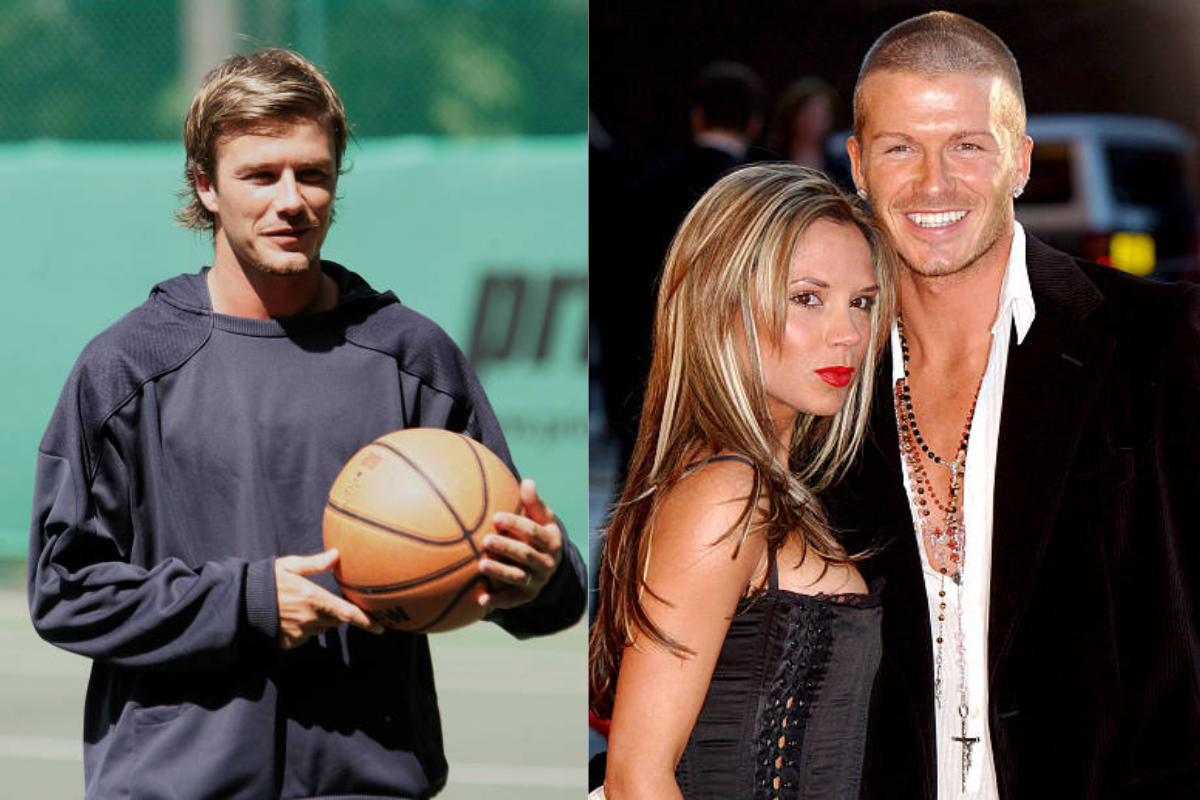
There is something uniquely compelling about the story of David Beckham young. Before the brand deals, before the Hollywood lifestyle, before the global fame — there was a skinny kid from Leytonstone with an obsessive love for football and a father who shared that obsession equally. The story of young David Beckham is not just a football story. It is a story about talent meeting relentless work ethic, family support, and an almost perfect moment in football history when everything aligned for one remarkable player.
Understanding where Beckham came from tells you everything about who he became.
Early Life and Family Background
David Robert Joseph Beckham was born on May 2, 1975, in Leytonstone, East London. He grew up in a working-class household in Chingford, a suburb in northeast London. His father, Ted Beckham, was a kitchen fitter and a devoted Manchester United fan. His mother, Sandra, was a hairdresser. The family was tight-knit, grounded, and football-obsessed from the very beginning.
Ted Beckham was not a passive supporter. He coached David from an extremely young age, spending hours in local parks drilling free kicks and crossing technique into his son. Many people who later analyzed Beckham’s almost supernatural ability from dead-ball situations trace it directly back to these countless hours of repetition with his father in those early years.
David had two sisters, Lynne and Joanne, and grew up in a household where Manchester United was essentially a religion. This childhood devotion to the club would later take on a deeply personal and professional meaning.
Childhood Passion for Football
From the time he could walk, Beckham had a football at his feet. Neighbors and family friends from that era consistently describe a child who simply did not stop practicing. While other kids played a variety of sports or spent time away from the game, young David was relentlessly focused on one thing.
At age eleven, he won the Bobby Charlton Soccer Skills competition, which was a significant early achievement. The prize was a trial with Barcelona’s youth setup in Spain — a remarkable opportunity for a child his age. That experience abroad, even briefly, exposed him to a different standard of football culture and gave him early confidence.
He attended Chase Lane Primary School and later Chingford Foundation School. His football talent was already visible to teachers and coaches during these years, though few could have predicted the scale of what was coming.
Youth Career and Manchester United Academy
Beckham signed as a schoolboy with Manchester United at age fourteen in 1989. This was the moment his professional journey truly began. By 1991, he had signed a Youth Training Scheme (YTS) contract with the club, which formalized his pathway into the professional game.
At United, he entered one of the most celebrated youth development programs in English football. He was part of a generation that included Ryan Giggs, Paul Scholes, Nicky Butt, Gary Neville, Phil Neville, and others — a cohort that became known as “the Class of 92.” This group would go on to define English football for more than a decade.
The youth setup at United under coach Eric Harrison was demanding, structured, and ruthless in its standards. Harrison later spoke extensively about how Beckham stood out not necessarily because of superior natural athleticism, but because of work ethic and technical precision. His crossing, his passing range, and his set-piece ability were already developing into something unusual.
In 1992, Beckham was part of the Manchester United FA Youth Cup winning squad. That team was extraordinarily talented, and competing within it every day pushed each player to a higher standard. Beckham absorbed those competitive pressures and used them.
The Breakthrough Years at Man United
David Beckham made his first-team debut for Manchester United in a League Cup match in September 1992, aged just seventeen. However, his development continued steadily rather than explosively at first. He was loaned to Preston North End in early 1995 to gain first-team experience, which proved valuable.
His defining breakthrough moment came on the opening day of the 1995-96 Premier League season, when Beckham scored from the halfway line against Wimbledon. The goal stunned the country. A young man picking up the ball on his own half, spotting the goalkeeper off his line, and bending a shot with extraordinary precision into the net — it was the kind of moment that crystallizes a career.
That goal did not just announce Beckham. It announced a new generation of English football.
He was twenty years old. From that moment, his trajectory changed permanently. Manager Sir Alex Ferguson integrated him fully into the first team. Beckham responded with consistency, intelligence, and reliability that surprised even those who had tracked him through the academy. During the 1996-97 and 1997-98 seasons, he established himself as one of the most technically gifted midfielders in the Premier League.
His right foot — particularly his ability to bend the ball with pace and accuracy — became a genuine tactical weapon. Defenders and goalkeepers had to account for it differently compared to other players. This was not an accident. It was the product of thousands of hours of deliberate practice that began in those Chingford parks with his father.
Style, Image, and Cultural Impact in His Youth
Even as a young footballer, Beckham stood out visually. In the mid-to-late 1990s, he was becoming simultaneously a sports figure and a cultural one. His hairstyles — the curtains, the shaved head, the mohawk — became genuine national talking points. His fashion choices were bold and deliberate.
In 1997, he began his relationship with Victoria Adams, one of the Spice Girls, who was arguably the most famous pop group in the world at the time. This relationship placed young Beckham at the intersection of sport and celebrity culture in a way that had rarely happened before in British public life.
He was not simply a footballer who was famous. He was becoming an icon in multiple cultural spaces at once.
His endorsement career began growing rapidly during these years. Adidas had recognized his commercial potential early, and their association with him deepened as his profile rose. Young Beckham understood, or was advised, that his image was an asset separate from his footballing talent — and he managed both with uncommon sophistication for someone his age.
Personal Life in His Early Years
Beyond the headlines, the young Beckham was described by those close to him as quiet, polite, and genuinely humble. Unlike the more flamboyant characters in English football of that era, he did not carry himself with arrogance. Former teammates and coaches consistently mentioned that he was professional in his daily habits and respectful in his personal dealings.
His relationship with Victoria became central to his identity through the late 1990s. They married in July 1999 at Luttrellstown Castle in Ireland, a wedding that was reported on almost as a national event. Their son Brooklyn was born in 1999, making Beckham a father at twenty-four.
The family dynamic he built — rooted in the same tight-knit, loyalty-first values he grew up with in Chingford — would remain a consistent thread through every chapter of his life that followed.
What Made Young Beckham Different from His Peers
It is worth asking directly: what separated young David Beckham from the many talented players who passed through elite academies but never reached his level?
Several factors stand out clearly.
Work ethic over raw talent. Beckham was never described as the most naturally gifted player of his generation, even within the Class of 92. But he outworked nearly everyone. His technical skills, particularly with the ball, were built rather than inherited.
Mental resilience. The 1998 World Cup saw him sent off against Argentina in the second round. The public backlash in England was severe, and an effigy of him was even hung outside a pub in London. For a young man of twenty-three, that level of national criticism could have destroyed a career. Instead, Beckham responded with one of the greatest single seasons of his professional life in 1998-99, ending with the treble under Ferguson.
Brand intelligence. He understood early that how he presented himself mattered beyond the pitch. This was not cynical — it appeared to align with a genuine creative interest in fashion and image — but it gave him advantages that purely football-focused players did not have.
Timing. He came of age during the early Premier League era, when English football was expanding its commercial scale dramatically and the global broadcast of matches was growing. His talent arrived in a window designed, almost perfectly, for someone with his profile.
Conclusion
The story of David Beckham young is ultimately a story about what happens when genuine talent is matched with an almost obsessive dedication to improvement. He was not handed his success. He grew up in a modest home in East London, practiced in public parks with his father, worked his way through a fiercely competitive academy, and seized his opportunity when it arrived.
What made young Beckham worth studying — then and now — is that the qualities which made him exceptional were not mysterious. They were visible, teachable, and rooted in choices made consistently over years. The physical talent was real, but the work ethic and mental strength were what separated him.
If you are exploring the origins of one of the most recognized athletes of the modern era, the answer always begins the same way: a kid from Chingford, a football, and a father who believed completely in what his son could become.
FAQs
What was David Beckham like as a child?
David Beckham was a football-obsessed child who spent enormous amounts of time practicing with his father in local parks in Chingford, East London. Family and friends described him as focused, dedicated, and unusually disciplined for his age. His father Ted shared his passion for both football and Manchester United, which shaped Beckham’s character from a very early age.
When did David Beckham start playing professional football?
Beckham signed as a Manchester United schoolboy at age fourteen in 1989. He signed a Youth Training Scheme contract in 1991 and made his first professional appearance in September 1992 at the age of seventeen, in a League Cup match. His full breakthrough into regular first-team football came during the 1995-96 Premier League season.
How did David Beckham get discovered?
Beckham was identified early through local youth football in East London. His talent led to a trial with Barcelona’s youth team after winning the Bobby Charlton Soccer Skills competition at eleven. Manchester United scouts identified him, and he joined their academy system at fourteen, which set him on the path to a professional career.
What was young Beckham’s best skill as a footballer?
His most exceptional technical quality from an early age was his ability to strike a dead ball with pace and extreme accuracy. His crossing and passing range from midfield were also highly developed. These skills were not natural gifts alone — they were the result of methodical, repetitive practice that began in his childhood and continued throughout his youth career.
What challenges did David Beckham face early in his career?
Beyond the competitive intensity of establishing himself at one of England’s biggest clubs, Beckham faced significant public pressure after being sent off during the 1998 World Cup against Argentina. The backlash from English fans and media was intense. Managing that scrutiny at twenty-three while maintaining performance levels required considerable mental strength, which he demonstrated convincingly in the seasons that followed.
